Buscar este blog

lunes, 15 de abril de 2013

Destructor alemán Z26


Destructor alemán Z26


El destructor Z26 fue un navío del Tipo 1936A ordenado para la Kriegsmarine el 23 de abril de 1938 y construido por DeSchiMAG en Bremen. Finalmente fue botado el 2 de abril de 1940 aunque los trabajos continuaron hasta el 11 de enero del año siguiente con un desplazamiento de 2.584 toneladas. Gracias a su planta motriz podía desarrollar una velocidad máxima de 36 nudos. Disponía de un armamento de cuatro torretas simples de 150 mm, dos emplazamientos dobles de 37 mm, cinco cañones antiaéreos de 20 mm y dos emplazamientos de cuatro tubos lanzatorpedos de 533 mm. Además de ello podía transportar 60 minas para tender campos minados para entorpecer la navegación aliada.

A las 16:00 horas del 28 de marzo de 1942 la 8º Flotilla de Destructores, liderada por el Z26 (KKpt G. von Berger), con el Z24 y el Z25 zarparon de Kirkenes para interceptar al convoy PQ-13. Pronto se formó una manada de lobos grises para dar caza a este convoy formado por le U-435, U-454 y el U-589 a los que posteriormente se les unió el U-456 y el U-585. En la tarde del 28 de marzo el HMS Blackfly recibió la orden de buscar supervivientes del carguero HMS Empire Ranger que tuvo la suerte de no encontrarse con los destructores alemanes pero los 61 supervivientes fueron rescatados por el Z24 pasando a engrosar la lista de prisioneros de guerra. 

 
El 29 de marzo a las 03:50 horas el U-376 localizó un grupo de barcos del convoy PQ-13 pero cuando los destructores alemanes se dirigían a él fueron localizados por el radar del HMS Trinidad que abrió fuego sobre el Z26 a una distancia de 3.500 metros. Con el Z26 alcanzado varias veces y fuera de combate puso su atención sobre el Z24 pero no logró ningún impacto sobre él que, además, logró evitar el impacto de siete torpedos. El Z26 tenía tres de sus cuatro torretas fuera de combate mientras que el HMS Trinidad sólo había sido alcanzado en tres ocasiones. A las 10:24 horas recibió un torpedo que no funcionó correctamente mientras que el HMS Trinidad encajó un proyectil bajo el puente de mando que causó la muerte de 31 miembros de la tripulación e inundó la sala de calderas, forzando al barco a romper el combate.

A las 10:32 el HMS Eclipse localizaba al dañado Z26 y comenzó a acercarse a él mientras abría fuego. El destructor alemán fue alcanzado con seis proyectiles más hasta que el Z24 y Z25 comenzaron a abrir fuego sobre el HMS Eclipse, alcanzándolo tres veces y forzando su retirada a las 11:20 horas. Finalmente el Z26 se hundió llevándose consigo a 240 tripulantes mientras que sus hermanos lograban rescatar a 96 hombres de las gélidas aguas, incluyendo al comandante de la flotilla. 


Fuentes:
GRÖNER, E. “German Warships: 1815–1945 Naval Institute Press, 1990
KOOP, G. “German Destroyers of World War II Naval Institute Press, 2003
ROHWER, J. “Chronology of the War at Sea 1939-1945: The Naval History of World War Two” Naval Institute Press, 2005
WHITLEY, M. “German Destroyers of World War Two” Naval Institute Press, 1991

English version

The destroyer Z26 was a ship of the Type 1936A Kriegsmarine ordered for the April 23, 1938 and built by Deschimag in Bremen. It was finally launched on April 2, 1940 although work continued until 11 January next year with a displacement of 2,584 tons. Thanks to the power plant could develop a maximum speed of 36 knots. It had an armament of four simple turrets 150 mm, two 37 mm double sites, five of 20 mm anti-aircraft guns and two sites of four 533 mm torpedo tubes. Moreover could carry 60 mines to lay minefields to disrupt Allied shipping.

At 16:00 pm on March 28, 1942 the 8th Destroyer Flotilla, led by Z26 (KKpt G. von Berger), with the Z24 and Z25 sailed from Kirkenes to intercept the convoy PQ-13. They soon formed a gray wolf pack to hunt him this convoy of U-435, U-454 and U-589 with the later they were joined by U-456 and U-585. On the afternoon of March 28 HMS Blackfly was ordered to search for survivors of the freighter HMS Empire Ranger who was lucky not to meet the German destroyers but the 61 survivors were rescued by the Z24 going to join the list of prisoners of war.

On 29 March at 03:50 hours U-376 spotted a group of ships of convoy PQ-13 but when the German destroyers addressed him were located by radar HMS Trinidad who opened fire on the Z26 at a distance of 3,500 meters. With the Z26 repeatedly reached out cold and turned his attention on the Z24 but failed no impact on him that also managed to avoid the impact of seven torpedoes. The Z26 had three of its four turrets out of action while the HMS Trinidad had been reached only three times. At 10:24 am received a torpedo malfunctioned while HMS Trinidad conceded a projectile under the bridge that killed 31 crew members and flooded the boiler room, forcing the ship to break up the fight.

At 10:32 the HMS Eclipse localized to damaged Z26 and began to approach him as he opened fire. The German destroyer was hit with six projectiles until the Z24 and Z25 opened fire on HMS Eclipse, hitting him three times and forcing its withdrawal at 11:20 hours. Finally Z26 sank taking 240 crew with him while his brothers were able to rescue 96 men from the frigid waters, including the commander of the flotilla.


Sources:
GRÖNER, E. “German Warships: 1815–1945 Naval Institute Press, 1990
KOOP, G. “German Destroyers of World War II Naval Institute Press, 2003
ROHWER, J. “Chronology of the War at Sea 1939-1945: The Naval History of World War Two” Naval Institute Press, 2005
WHITLEY, M. “German Destroyers of World War Two” Naval Institute Press, 1991

viernes, 12 de abril de 2013

Experten alemanes: Eberhard von Boremski


Oberfeldwebel Eberhard von Boremski


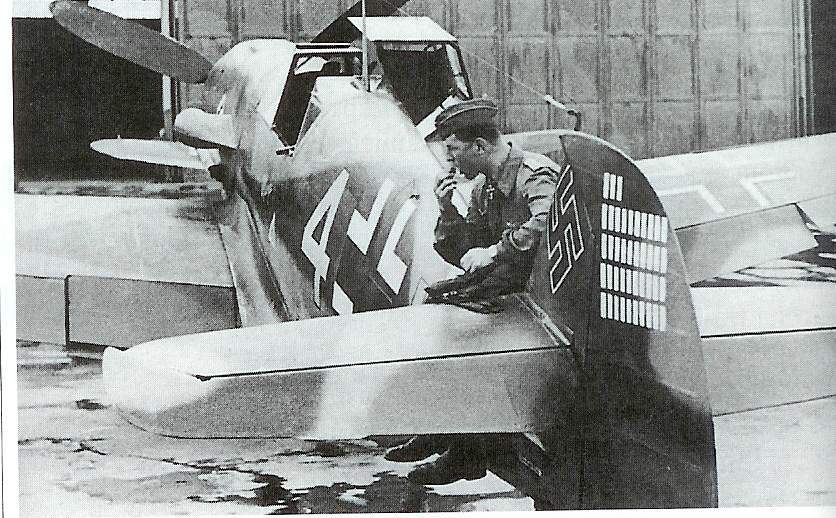
Nació el 24 de septiembre de 1914 en una localidad de Pomerania uniéndose a la Luftwaffe en 1939 para servir en la 5./Trägergruppe 186 (que llegaría a convertirse posteriormente en el II./JG 77). En marzo de 1940 fue trasladado al 9./JG 3 dónde lograría su primer derribo al abatir dos bombarderos franceses Potez 63 el 13 de junio.

Con la invasión de Rusia en junio de 1941 tomó parte en la ofensiva aumentando su registro personal de victorias alcanzado las 43 victorias en mayo de 1942. Sirvió como instructor de vuelo durante un periodo de tiempo hasta que regresó a primera línea de combate, con el JG 3, a mediados de 1942. En febrero de 1943 fue nombrado Staffelkapitän del 7./JG 3, puesto que mantendría hasta el mes de mayo que resultó herido en una misión de combate. A principios de 1944 fue nombrado como oficial del Deutsch-Königlich Rumänischen Jagdverband de la Luftfflote 4 hasta que en abril fue destinado a comandar al 12./JG 3. Fue en este puesto dónde resultó de nuevo herido en el transcurso de una misión de combate.

Desde septiembre a noviembre de 1944 lideró al 1./Jagdgruppe Ost y 9./Ergänzungs-Jagdgeschwader 1. Terminó la contienda con un registro final de 104 victorias, todas menos 4 sobre los soviéticos en 630 misiones de combate. Se rindió a las fuerzas en Checoslovaquia a los norteamericanos que finalmente lo entregaron a los soviéticos. Pasó diez años como prisionero de guerra regresando a casa en 1955. Boremski murió en un accidente aéreo en Hamburgo en diciembre de 1963.


Fuentes:
BERGSTRÖM, C. “Black Cross, Red StarPacifica Military History, 2001
FELLGIEBLE, W-P. “Die Träger des Ritterkreuzes des Eisernen Kreuzes 1939–1945” Podzun-Pallas, 2000
MUSCIANO, W. “Messerschmitt Aces”  Tab Books, 1989
WEAL, J. “Bf 109 Aces of the Russian Front.” Osprey, 2001
WEAL, J. “More Bf 109 Aces of the Russian Front.” Osprey, 2007

English version

He was born on September 24, 1914 in a village in Pomerania joining the Luftwaffe in 1939 to serve in the 5./Trägergruppe 186 (which would later become the II./JG 77). In March 1940 he was transferred to 9./JG 3 where achieved his first kill to abate two French Potez 63 bombers on 13 June.

With the invasion of Russia in June 1941 he took part in the offensive increasing his personal record of 43 victories achieved victories in May 1942. He served as a flight instructor for a period of time until he returned to frontline combat, with JG 3, in mid-1942. In February 1943 he was appointed Staffelkapitän of the 7./JG 3, since it would maintain until May who was injured in a combat mission. In early 1944 he was appointed as an officer of Deutsch-Königlich Rumänischen Luftfflote Jagdverband of April 4 until he was assigned to command the 12./JG 3. It was in this position again where was wounded during a combat mission.

From September to November 1944 and led to
1./Jagdgruppe Ost and 9./Ergänzungs-Jagdgeschwader 1. He finished the race with a final record of 104 victories, all but four of the Soviets in 630 combat missions. He surrendered to the forces in Czechoslovakia to Americans finally handed over to the Soviets. He spent ten years as a prisoner of war returning home in 1955. Boremski died in a plane crash in Hamburg in December 1963.

Bf 109 F-4 of 9./JG3 (Y4+I) Eberhard von Boremski (W.Nr.13220) Zhuguyev, Russia (May-1942)


Sources:
BERGSTRÖM, C. “Black Cross, Red StarPacifica Military History, 2001
FELLGIEBLE, W-P. “Die Träger des Ritterkreuzes des Eisernen Kreuzes 1939–1945” Podzun-Pallas, 2000
MUSCIANO, W. “Messerschmitt Aces”  Tab Books, 1989
WEAL, J. “Bf 109 Aces of the Russian Front.” Osprey, 2001
WEAL, J. “More Bf 109 Aces of the Russian Front.” Osprey, 2007

jueves, 11 de abril de 2013

Portaaviones japonés Amagi


Portaaviones japonés IJN Amagi


El IJN Amagi fue el segundo portaaviones de la clase Unryu aunque no tuvo ningún papel destacable durante la contienda. Sus misiones se limitaron a realizar transporte y entrenamiento y limitado por el ahorro de combustible. Disponía de un armamento de 12 cañones de 127 mm y 89 cañones antiaéreos de 25 mm. Su tripulación estaba compuesta por 1.595 hombres y podía transportar hasta 65 aviones.

El 19 de marzo de 1945 recibió su primer ataque aunque no causaron daños de consideración. El 13 de abril se unió a su gemelo, el Katsuragi, en el arsenal de Kure para comenzar las labores de camuflaje con el entorno. Para aquellas fechas ya tenía la consideración de buque de reserva naval pero se le cambió a buque de servicio especial. El 24 de julio sufrió un importante ataque aéreo que destruyó la cubierta y provocó inundaciones que terminaron por escorarlo. Con estos daños y ante la imposibilidad de estabilizarlo se dio la orden de abandonarlo. Cuatro días más tarde regresaron los aviones estadounidenses que causaron más daños y acentuaron la escora a babor. El 29 de julio finalmente el Amagi zozobró en aguas poco profundas quedando con las hélices de estribor al descubierto, apoyado sobre el fondo, con una inclinación de 70º y hocicado a proa. 

Fue el último portaaviones japonés hundido durante la contienda iniciándose los trabajos para reflotarlo el 13 de noviembre de 1946 concluyendo el día 5 del mes siguiente. Una vez terminados los trabajos se desguazó, labores que se extendieron durante un año, hasta el 12 de diciembre de 1947. 


Fuentes:
JENTSURA, H. “Warships of the Imperial Japanese Navy, 1869-1945 Naval Institute Press
CHESNEAU, R. “All the World´s Fighting Ships 1922-1946Conway Maritime Press
STILLE, M. “Imperial Japanese Navy Aircraft Carriers 1921-45” Osprey

English version

The IJN Amagi was second class carrier Unryu but had no prominent role during the war. Their missions were limited to performing transport and limited training and fuel economy. It had an armament of 12 guns of 127 mm and 89 anti-aircraft guns of 25 mm. His crew consisted of 1595 men and could carry up to 65 aircraft.


The March 19, 1945 he received his first attack but did not cause significant damage. On April 13 he joined his twin, Katsuragi in Kure arsenal to begin the work of camouflage with the environment. For that time and was considered a reserve naval ship but was changed to special service vessel. On July 24, suffered a major air strike that destroyed the roof and caused flooding that eventually escorarlo. With this damage and unable to stabilize the order was given to abandon. Four days later, U.S. planes returned causing more damage and accentuated the list to port. On July 29 finally Amagi capsized in shallow water leaving the starboard propeller exposed, resting on the bottom, with an inclination of 70° and hocicado forward.

It was the last Japanese carrier sunk during the war and initiated work to refloat the 13 November 1946 concluding the 5th of the following month. Upon completion of the work was broken up, work that extended for one year, until December 12, 1947.


Sources:
JENTSURA, H. “Warships of the Imperial Japanese Navy, 1869-1945 Naval Institute Press
CHESNEAU, R. “All the World´s Fighting Ships 1922-1946Conway Maritime Press
STILLE, M. “Imperial Japanese Navy Aircraft Carriers 1921-45” Osprey

miércoles, 10 de abril de 2013

Hawker Fury en Yugoslavia


Hawker Fury en servicio con la Fuerza Aérea yugoslava


El Hawker Fury era un caza biplane británico que fue suministrado a la Fuerza Aérea yugoslava en los años 30. Inicialmente recibió el sobrenombre de Hornet y era el caza destinado a escoltar a los bombarderos ligeros Hawker Hart. El Fury fue revisado en Yugoslavia y se decidió cambiar la planta motriz por el más potente motor Kestrel XVI de 745 hp, equipado con un radiador de baja resistencia y también se revisó el tren de aterrizaje. También se hizo previsión para la instalación de dos ametralladoras adicionales bajo las alas para mejorar su potencia de fuego. Entre 1936 y 1937 llegaron 10 unidades construidas por Hawker seguidas de otras 40 unidades que fueron construidas bajo licencia en Ikarus (24) y en Zmaj (16).

Con la invasión alemana el 6 de abril 1941 los Hawker Fury tomaron parte en la defensa de la nación combatiendo contra los Messerschmitt Bf 109 y Bf 110. En la lucha que se desarrolló 10 Hawker Fury del 36 LG fueron destruidos, cinco de ellos mientras intentaban despegar muriendo en la acción ocho de los pilotos de la unidad, otros dos más resultaron también destruidos, al igual que un Bücker Bü 131. Por su parte 5 de los Bf 109 y dos Bf 110 fallaron al regresar a sus bases, bajas no causadas por la acción enemiga aunque uno de ellos fue derribado al colisionar con un Fury.

El otro escuadrón de Hawker Fury fue activado cuando se produjo la invasión atacando a las fuerzas de tierra alemanas. Uno de ellos resultó derribado por el fuego Flak mientras que otro fue derribado por un caza italiano Fiat CR.42. El resto de Fury fueron destruidos o estaban fuera de servicio cuando finalizaron las hostilidades. 


Fuentes:
SHORES, C. “Air War for Yugoslavia, Greece & Crete – 1940-41” Grub Street, 1987
ORMEÑO, J. “Messerschmitt Bf 109. El cazador de la Luftwaffe
MASON, “The Hawker Hurricane: An Illustrated HistoryCrecy Publishing, 2002

English version

The Hawker Fury was a British biplane fighter was delivered to the Yugoslav Air Force in the 30s. Initially was nicknamed Hornet fighter and was destined to escort the Hawker Hart light bombers. The Fury was revised in Yugoslavia and it was decided to change the power plant with the most powerful engine of 745 hp Kestrel XVI, radiator equipped with a low resistance and also revised the landing gear. Also made provision for the installation of two additional machine guns under the wings to improve their firepower. Between 1936 and 1937 reached 10 units built by Hawker followed by another 40 units that were built under license in Ikarus (24) and Zmaj (16).

With the German invasion on April 6, 1941 the Hawker Fury took part in the defense of the nation fighting the Messerschmitt Bf 109 and Bf 110. In the fight which took place in October 36 Hawker Fury LG were destroyed, five of them dying while trying to take off the action in eight of the pilots of the unit, two others were also destroyed, as well as a Bücker 131. For its part 5 of the Bf 109 and two Bf 110 failed to return to their bases, no casualties caused by enemy action but one of them was shot down after colliding with a Fury.

The other squadron Hawker Fury was activated when the invasion occurred attacking German ground forces. One of them was shot down by Flak fire while another was shot down by Italian Fiat CR.42 fighter. The rest of Fury were destroyed or were off duty when hostilities ended.


Sources:
SHORES, C. “Air War for Yugoslavia, Greece & Crete – 1940-41” Grub Street, 1987
ORMEÑO, J. “Messerschmitt Bf 109. El cazador de la Luftwaffe
MASON, “The Hawker Hurricane: An Illustrated HistoryCrecy Publishing, 2002

martes, 9 de abril de 2013

Propaganda alemana (II)


Propaganda de guerra alemana (II)


En mis siguientes post expondré una serie de dibujos procedentes de Kladderadatsch 1934, un importante semanario satírico alemán que adoptaron rápidamente al nacionalsocialismo. Estas caricaturas reflejan la línea de propaganda nazi en el momento: Alemania quiere la paz, mientras que el resto del mundo se estaba preparando para la guerra.

El título: En el nuevo Jardín del Edén. "Francia, personificado como Eva, está siendo seducida por la serpiente de la industria de armamentos"

In my next post will discuss a series of drawings from Kladderadatsch 1934, a major German satirical weekly that quickly adopted the National. These cartoons reflect the Nazi propaganda line at the time: Germany wants peace, while the rest of the world was preparing for war.

Title: In the new Garden of Eden. "France, personified as Eva, is being seduced by the serpent of the arms industry"


Fuente/Source:
Kladderadatsch (1848-1944)

lunes, 8 de abril de 2013

Artillería autopropulsada: SiG 33


15 cm sIG 33 auf PzKpfw I Ausf B


Como precursor de la artillería autopropulsada en el ejército alemán podemos mencionar la conversión de varios modelos. Esto es, la utilización de chasis de carros obsoletos a los que se le montaba una pieza artillera, similar al desarrollo de los cazacarros de primera generación como la serie Marder o el Hornise. Como primer elemento de la artillería autopropulsada podemos mencionar el SiG IB o SiG 33 auf PzKpfw I Ausf B (15 cm sIG 33 auf PzKpfw I Ausf B) que consistía en el montaje del cañón pesado de infantería Tipo 33 de 150 mm, incluida cureña y ruedas, sobre el bastidor del Panzerkampfwagen I Ausf B. De este vehículo se completaron un total de  38 conversiones en un pedido inicial.

El sistema estaba abierto por arriba y protegido por tres de sus lados por escudos blindados de 10 mm de espesor que elevaba la altura total del vehículo hasta los 3 metros. Su movilidad estaba restringida ya que el peso extra del arma y del escudo blindado, 8´5 toneladas más, sobrecargaba el bastidor. La dotación era de 4 hombres y entró en servicio en las campañas de Polonia y Francia resultado un apoyo efectivo y más versátil que las piezas de artillería transportadas por vehículo o hipomóviles. Estas experiencias fueron buenas para el ejército alemán que pronto solicitaría nuevos vehículos para desempeñar esta importante labor en el campo de batalla moderno.


Fuente:

English versión

As a precursor to self-propelled artillery in the German army can mention the conversion of various models. That is, the use of obsolete car chassis to which is mounted a artillery piece, similar to the development of the first generation tank destroyer as Marder or Hornise series. The first element of the self-propelled artillery can mention the IB or Sig Sig 33 auf PzKpfw I Ausf B (15 cm sIG 33 auf PzKpfw I Ausf B) consisting of the gun mount Type 33 heavy infantry of 150 mm, including carriage and wheels on the frame of Panzerkampfwagen I Ausf B. This vehicle is completed a total of 38 conversions in an initial order.

The above system was opened and protected on three sides by armored shields 10 mm thick which raised the total height of the vehicle to 3 meters. His mobility was restricted because the extra weight of the gun and armored shield, 8.5 tons, overloaded the rack. The budget was 4 men and entered service in the campaigns in Poland and France result effective support and more versatile than the guns carried by horse-drawn vehicle or. These experiences were good for the German army soon solicit new vehicles to carry out this important work on the modern battlefield.


Source:

viernes, 5 de abril de 2013

Experten alemanes: Hans Hahn


Major Hans Hahn


Nacido el 14 de abril de 1914 en Gotha (Thüringen) participó en los juegos olímpicos de Berlín en la categoría de Pentatlón. Se alistó en el ejército el 1 de abril de 1934 en la rama de infantería aunque finalmente transferido a la Luftwaffe dónde ascendió a Leutnant el 1 de abril de 1936. El 1 de noviembre de 1937 fue transferido a la nueva Jagdfliegerschule (Escuela de caza) en Werneuchen como instructor. El 11 de octubre de 1939 y con el rango de Oberleutnant fue transferido al II./JG 2 siendo nombrado Staffelkapitän del 4./JG 2 el 15 de diciembre.

Sus dos primeras victorias fueron archivadas el 14 de mayo de 1940, durante la Batalla de Francia, dos Hurricane de la RAF. Esta fue la primera ocasión en la que entraba en combate y solo se le acreditó uno de los dos derribos. Durante la Batalla de Inglaterra derribó su primer aparato el 31 de agosto al despachar un caza Spitfire. Durante los duros enfrentamientos en los cielos ingleses logró alcanzar las 20 victorias acreditadas siendo galardonado con la Ritterkreuz. El 29 de octubre de 1940 fue ascendido a Hauptmann y nombrado Gruppenkommandeur del II./JG 2. Un año más tarde ya sumaba 50 victorias alcanzando las 60 acreditadas al derribar un caza Spitfire de la RAF el 16 de septiembre de 1942.


El 1 de noviembre de 1942 fue transferido, junto con el resto del II./JG 54 como Gruppenkommandeur, al Frente Oriental. En el espacio de 3 meses logró sumar otras 42 victorias más a su registro. El 30 de diciembre derribó cinco aparatos soviéticos (75-79) y el 1 de enero fue ascendido a Major. El 14 de enero de 1943 derribó nada menos que 7 cazas La-5 (80-86). El 21 de febrero de 1943 estaba destinado en el Frente del Este junto con la III./JG 54. Allí derribó su aparato número 108, un caza La-5 que cayó cerca de Staraya Russa. Sin embargo su Bf 109 G-2/R6 (W.Nr. 13949) “<< Negro” fue alcanzado en su ala izquierda con lo que tuvo que tomar tierra en territorio enemigo. Hahn fue derribado por el as soviético Pavel Grazhdanikov del of 169º IAP (13 victorias, muerto en acción el 5 de abril de 1943). Realizó un total de 560 misiones de combate alcanzando 108 victorias aéreas, 66 contra pilotos occidentales incluyendo 53 Spitfire y 42 contra aparatos soviéticos, 7 de ellos Il-Sturmovik. Hahn fue hecho prisionero y liberado en 1950 muriendo el 18 de diciembre de 1982 de cáncer en München.


Fuentes:
WEAL, J. “Bf 109 Aces of the Russian Front”Osprey, 2001
WEAL, J. “Bf 109 FGK Aces of the Western Front” Osprey, 1999
BERGSTRÖM, C. “Black Cross, Red Star. Vol.2Pacifica Military History, 2001
MUSCIANO, W. “Messerschmitt Aces” Tab Books, 1989

English version

Born April 14, 1914 in Gotha (Thüringen) participated in the Berlin Olympics Pentathlon in the category. He enlisted in the Army on April 1, 1934 in the infantry branch but eventually transferred to the Luftwaffe Leutnant reached where the April 1, 1936. On November 1, 1937 was transferred to the new Jagdfliegerschule (Fighter School) in Werneuchen as instructor. The October 11, 1939 and with the rank of Oberleutnant was transferred to II./JG 2 was named Staffelkapitän of 4./JG 2 on December 15.

His first two victories were filed on May 14, 1940, during the Battle of France, two RAF Hurricane. This was the first time that he went to fight and only one was credited with two tackles. During the Battle of Britain dropped its first aircraft on 31 August to dispatch a Spitfire fighter. During the heavy fighting in the skies English managed to reach the 20 wins being awarded the accredited Ritterkreuz. The October 29, 1940 he was promoted to Hauptmann and appointed Gruppenkommandeur of II./JG 2. A year later he added 50 wins to reach the 60 accredited down a RAF Spitfire fighter on September 16, 1942.


Hauptmann Hans Hahn, Gruppenkommandeur of III./JG 2 in his Fw 109A-3 W.Nr. 223  "<<". May 1942, Beaumont le Roger, France.

On November 1, 1942 was transferred, along with the rest of the II./JG 54 as Gruppenkommandeur, the Eastern Front. In the space of three months managed to add another 42 victories to his record. The December 30 Soviet aircraft shot down five (75-79) and January 1 was promoted to Major. The January 14, 1943 dropped no less than 7 fighter La-5 (80-86). The February 21, 1943 was assigned to the Eastern Front with the III./JG 54. They pulled down his unit number 108, a fighter La-5 which fell near Staraya Russa. However, his Bf 109 G-2/R6 (W. No. 13949) "<< Black" was hit in his left wing so he had to take land in enemy territory. Hahn was shot down by Soviet ace of Pavel Grazhdanikov the 169th IAP (13 victories, killed in action on April 5, 1943). A total of 560 combat missions reaching 108 aerial victories, including 66 against Western pilots Spitfire 53 and 42 against Soviet aircraft, including 7 Il-Sturmovik. Hahn was taken prisoner and released in 1950 and died on December 18, 1982 of cancer in München.


Sources:
WEAL, J. “Bf 109 Aces of the Russian Front”Osprey, 2001
WEAL, J. “Bf 109 FGK Aces of the Western Front” Osprey, 1999
BERGSTRÖM, C. “Black Cross, Red Star. Vol.2Pacifica Military History, 2001
MUSCIANO, W. “Messerschmitt Aces” Tab Books, 1989

jueves, 4 de abril de 2013

Hallazgo del submarino S-6


Hallazgo del submarino soviético S-6

La vida operativa del submarino soviético S-6, perteneciente a la Flota soviética del Báltico, se trunco en 1941 cuando colisionó con una mina alemana yéndose a pique. Han sido militares suecos los que han descubierto el naufragio aunque ha habido trabajos conjuntos con Rusia para intentar localizar los restos de este naufragio que hasta finales del año pasado se encontraba desaparecido. El S-6 fue uno de los 12 submarinos soviéticos que perdió la Flota del Báltico durante 1941.

El 2 de agosto de 1941 el submarino comunicó su última localización cerca de la isla de Bornholm perdiéndose más tarde la comunicación. La clase S de submarinos soviéticos fueron los más exitosos para Rusia logrando hundir 82.770 toneladas de barcos mercantes y 7 barcos de guerra enemigos. Muchos de estos submarinos se han encontrado en aguas suecas en los últimos años. En 2009 encontraron al S-2 hundido en enero de 1940 al colisionar con una mina, como resultado murieron los 50 hombres de su tripulación. 


Fuente:
MailOnline

English versión

The operating life of the Soviet submarine S-6, belonging to the Soviet Baltic Fleet, was cut short in 1941 when he collided with a German mine foundering. Swedish military have been those who have discovered the wreck while there have been joint efforts with Russia to try to locate the remains of the wreck that until late last year was missing. The S-6 was one of the 12 submarines lost Soviet Baltic Fleet during 1941.

 
On August 2, 1941, the submarine started on her last deployment to Bornholm Island when her contact was lost. S-class boats were the most successful for Russia during World War Two. In total, they sank 82,770 gross register tons of merchant shipping and seven warships. That accounted for around one-third of all tonnage sunk by Soviet submarines during the war. Several Soviet submarines sunk during World War Two have been found in Swedish waters over the years. In June 2009, divers found the wreck of the S-2, another Soviet sub sunk by mines in January 1940 with some 50 crew members on board, in waters further north between Sweden and Finland.


Source:
MailOnline