Buscar este blog

lunes, 22 de julio de 2013

Kamikazes Vs US Navy


Barcos de la US Navy alcanzados por los Kamikazes


Kamikaze, voz tomada del japonés “神風” (“viento divino”) por el ejército estadounidense para referirse a los ataques suicidas efectuados por pilotos de una unidad especial perteneciente a la Armada Imperial Japonesa contra embarcaciones de la flota de los Aliados a finales de la Segunda Guerra Mundial. Sin embargo, en Japón no se utiliza con este sentido la palabra “kamikaze”, sino que se prefiere el término “shinpū tokubetsu kōgeki tai” (“神風特別攻撃隊” o “unidad especial de ataque shinpū”) o su abreviatura “tokkōtai” (“特攻隊”). De entonces en adelante, el uso de esta palabra en el resto del mundo se ha extendido y se aplica sin mucho rigor a todo tipo de ataques suicidas, sin importar el método empleado (uso de explosivos, automóviles, etc.) o la nacionalidad del atacante, además de como una forma metafórica donde el individuo tiene pocas o escasas probabilidades de éxito con un riesgo considerable.

USS Missisisipi
El acorazado USS Missisisipi comenzó a bombardear el  golfo de Lingayen  el 6 de enero 1945. A pesar de los daños cerca de su línea de flotación recibidos por un kamikaze, apoyó la invasión hasta el 10 de febrero. Tras las reparaciones en Pearl Harbor, se marchó a Nakagusuku Wan, Okinawa, llegando a 6 de mayo para apoyar a las fuerzas desembarcadas allí. Sus armas de gran alcance atacaron las defensas del Castillo de Shuri, donde los japoneses habían detenido la ofensiva. El 5 de junio, un kamikaze se estrelló en el costado de estribor, pero el barco siguió prestando apoyo a la lucha contra las tropas en Okinawa hasta el 16 de junio a pesar de los daños sufridos.

The battleship USS Missisisipi began bombing the Lingayen Gulf on January 6, 1945. Despite the damage near the waterline greeted by a kamikaze, supported the invasion until 10 February. After repairs at Pearl Harbor, went to Nakagusuku Wan, Okinawa, reaching 6 May to support the forces landed there. Its powerful weapons defenses attacked Shuri Castle, where the Japanese had stopped the offensive. On 5 June, a kamikaze crashed into the starboard side, but the ship continued to support the troops fighting in Okinawa until 16 June despite the damage.

USS California
En enero de 1945, el USS California, también participó en la invasión del golfo de Lingayen. Fue dañado por un Kamikaze, el 6 de enero, pero se mantuvo en acción más de dos semanas más antes de poner rumbo a los Estados Unidos para la reparación y una revisión general.

In January 1945, the USS California, also participated in the invasion of Lingayen Gulf. It was damaged by a Kamikaze, on January 6, but remained in action for more than two weeks before heading to the U.S. for repair and overhaul.


USS Colorado
El acorazado USS Colorado fue alcanzado por dos Kamikazes, cuando estaba en el Golfo de Leyte a finales de noviembre de 1944. Permaneció en la zona de combate, apoyando la invasión de Mindoro en diciembre y los desembarcos del Golfo de Lingayen en enero. Durante marzo, abril y mayo de 1945, el USS Colorado bombardeo Okinawa en apoyo de las tropas que combatían en tierra. En agosto y septiembre de 1945 cubrió la ocupación de Japón, y luego partió finalmente para los Estados Unidos de regreso a casa.

The battleship USS Colorado was hit by two Kamikazes, when I was in Leyte Gulf in late November 1944. He remained in the combat zone, supporting the invasion of Mindoro in December and the Lingayen Gulf landings in January. During March, April and May 1945, the USS Colorado Okinawa bombing in support of ground troops fighting. In August and September of 1945 covered the occupation of Japan, and then departed for the United States finally back home.

 Instantes antes de que el acorazado USS Colorado fuera impactado por un piloto kamikaze, 27 de noviembre de 1944

USS New Mexico
Después de las reparaciones participó en la invasión de Okinawa, entre marzo y mayo de 1945. Allí fue de nuevo alcanzado por un kamikaze, el 12 de mayo, sufriendo en el ataque más de 170 bajas. La rendición de Japón le sorprendió preparándose para la invasión y estuvo presente en la bahía de Tokio cuando se firmó la rendición el 2 de septiembre. Regresó a casa a mediados de octubre cuando llegó a Boston (Massachusetts). En julio de 1946 fue dado de baja y vendido para el desguace en octubre del año siguiente.

After repairs participated in the invasion of Okinawa, between March and May 1945. There was again hit by a kamikaze, May 12, in the attack suffered over 170 casualties. The surrender of Japan surprised preparing for the invasion and was present in Tokyo Bay when the surrender was signed on September 2. He returned home in mid-October when he arrived in Boston (Massachusetts). In July 1946 was decommissioned and sold for scrapping in October of the following year.

 USS New Mexico en el momento de ser alcanzado por un piloto Kamikaze, 12 de mayo de 1945

USS Maryland
Después de su regreso a la zona de guerra, participo en la campaña de las Islas Marshall y el la campaña de Saipan, donde fue alcanzado por un torpedo. Posteriormente regresó a Pearl Harbor pero tan solo 34 días después partió de nuevo al combate. Participó en la batalla del Golfo de Leyte apoyando los desembarcos y destruyendo los acorazados japoneses Fuso y Yamashiro. Poco después, patrullando la zona del estrecho de Surigao, dos kamikazes se estrellaron contra el acorazado matando a 31 marineros. Siguió patrullando hasta su relevo el 2 de diciembre, llegando a Pearl Harbor el día 19 del mismo mes. Después de las reparaciones pertinentes, el 4 de marzo zarpó para unirse a la campaña de Okinawa apoyando los bombardeos sobre las posiciones japonesas. Allí fue de nuevo alcanzado por un kamikaze con una bomba de 500 kg que causo 53 bajas entre la tripulación.

After his return to the war zone, I participate in the Marshall Islands campaign and the campaign of Saipan, where he was hit by a torpedo. He then returned to Pearl Harbor but only 34 days after the fighting started again. He participated in the Battle of Leyte Gulf landings supporting and destroying Japanese battleships Fuso and Yamashiro. Soon after, patrolling Surigao Strait, two kamikazes crashed into the battleship killing 31 sailors. Patrolling continued until relieved on December 2, arriving at Pearl Harbor on the 19th of the same month. After necessary repairs, sailed March 4 to join the Okinawa campaign supporting the bombing of the Japanese positions. There was again hit by a kamikaze with a 500 kg bomb that caused 53 casualties among the crew.

 The USS Maryland takes a Kamikaze hit in November 1944

Fuentes/Sources
SHEFTALL, M. “Blossoms in the wind: Human legacies of the Kamikaze” NAL, 2005
OMUKI-TIERNEV, E. “Kamikaze Diaries: Reflections of Japanese Student Soldiers” University Of Chicago Press, 2007
KUWAHARA, Y. “Kamikaze: A Japanese Pilot's Own Spectacular Story of the Famous Suicide Squadrons” American Legacy Media, 2007

miércoles, 17 de julio de 2013

PzKpfw III Ausf G


Panzerkampfwagen III Ausf G


El PzKpfw III Ausf G apareció en octubre de 1940 y presentaba pocas diferencias externas con respecto a los modelos anteriores, como la mejora de la cúpula del jefe del carro a mediados de su producción. Los primeros 50 ejemplares iniciales montaban el cañón de 37 mm del Ausf F, pero pronto se cambió por el cañón L/42 de 50 mm que mejoraba su actuación carro contra carro. Con este cañón se armó a otros 550 PzKpfw III Ausf G a partir de julio de 1940. A finales de 1941 los Ausf G supervivientes equipados con el cañón de 37 mm fueron modernizados mediante la instalación del cañón L/42. Durante las últimas fases de su producción se le instalaron unas nuevas orugas más anchas de 40 cm para mejorar su movilidad por terreno blando.

Otro de los cambios más significativos experimentados por este nuevo modelo fue el aumento del blindaje trasero aumentándose de los 21 mm de la versión anterior hasta los 30 mm de espesor. Los primeros ejemplares fueron utilizados para reemplazar las pérdidas sufridas durante la batalla de Francia en mayo y junio de 1940. En la torreta también había instalada una ametralladora coaxial MG 34 de 7´92 mm para su defensa cercana. En el techo se le instaló también un ventilador para la extracción de los humos provocados por el cañón durante el combate. Para el conductor se instaló un periscopio pivotante que mejoraba la visibilidad.

 PzKpfw III Ausf G on the roll in North Africa, 1942

Los Ausf G que sirvieron con el cuerpo expedicionario alemán destacado en el norte de África, DAK (Deutches Áfrika Korps), sufrieron modificaciones específicas para el nuevo teatro de operaciones tropicalizándose a fin de evitar los problemas mecánicos propios del desierto, radiadores más grandes y filtro de aire adicional de fieltro.

Las campañas de Polonia y Francia demostraron que el PzKpfw III estaba poco blindado  y para corregirlo se añadió planchas externas en las zonas vulnerables, pero la suspensión soportaba ya mucha carga además que un aumento de la presión sobre el suelo no era deseable y prácticamente no viable. Por tanto fue necesario el rediseño del tren de rodadura a fin de aceptar más peso dando origen al Ausf H. Su producción totalizó 600 unidades desde abril de 1940 hasta febrero de 1941.


Fuentes:
ORMEÑO, J. “Panzerkampfwagen III. El pequeño veterano de la Wehrmacht” Serga, nº 47
GANDER, T. “Tanks in Detail 7: PzKpfw III Ausf A to N Panzer III” Ian Allan Publishing, 2004
PERRET, B. “  Panzerkampfwagen III. Mediun tank 1936-1944” Osprey, 1999

English version

The PzKpfw III Ausf G appeared in October 1940 and had few external differences with respect to previous models, such as the improvement of the dome of the head of the car in mid-production. The first 50 initial specimens mounted 37mm cannon of Ausf F, but soon changed to 50 mm L/42 cannon which improved their performance car against car. This cannon was assembled another 550 PzKpfw III Ausf G from July 1940. In late 1941 the Ausf G survivors equipped with 37 mm cannon were modernized by installing the L/42 cannon. During the last stages of production were installed with new wider tracks 40 cm to improve their mobility on soft ground.

Another of the most significant changes experienced by this new model was the increase being increased rear armor of 21 mm from the previous version to 30 mm thick. The first examples were used to replace losses during the Battle of France in May and June 1940. In the turret also had installed a coaxial machine gun 7.92 mm MG 34 for close defense. On the roof was also installed a fan to extract the fumes caused by the cannon during combat. For the driver was installed pivoting periscope that improved visibility.


The Ausf G who served with the prominent German expeditionary force in North Africa, DAK (Deutsches Afrika Korps) were specific modifications to the new theater tropicalizándose to avoid mechanical problems own desert, larger radiators and filter Additional air felt.

The campaigns in Poland and France showed that the PzKpfw III was poorly shielded and to correct external plates was added in vulnerable areas, but the suspension also bear heavy load and an increased ground pressure was not desirable and practically feasible. Therefore it was necessary to redesign the undercarriage in order to accept more weight giving rise to the Ausf H. Its production reached 600 units from April 1940 to February 1941


Sources:
ORMEÑO, J. “Panzerkampfwagen III. El pequeño veterano de la Wehrmacht” Serga, nº 47
GANDER, T. “Tanks in Detail 7: PzKpfw III Ausf A to N Panzer III” Ian Allan Publishing, 2004
PERRET, B. “  Panzerkampfwagen III. Mediun tank 1936-1944” Osprey, 1999

martes, 16 de julio de 2013

Mitsubishi Ki-21


Mitsubishi Ki-21


El Mitsubishi Ki-21 (bombardero pesado Type 97) fue producido por los ingenieros de Nakata y Ozawa en respuesta a las especificaciones solicitadas por el Cuartel General del Aire para la Fuerza Aérea japonesa el 15 de febrero de 1936. Los dos primeros prototipos realizaron sus pruebas por primera vez el 18 de diciembre de 1936 y constituyeron la base para el modelo de serie inicial, el Mitsubishi Ki-21-Ia (Type 97 Model 1A)

Debido a los embotellamientos en la producción industrial japonesa no fue hasta finales de 1939 cuando los primeros Ki-21 llegaron a las unidades operativas al equipar al 60º Hikosentai con base en China. La siguiente unidad en recibir este aparato fue el 61º Sentai poco después. Las primeras experiencias de combate en China revelaron un armamento defensivo y blindaje escasos para operar en cielos hostiles. Esto provocó la aparición de las siguientes versiones, el Ki-21-Ib y el Ki-21-Ic que incorporaban más blindaje y una ametralladora Type 89 de 7´7 extra. También se aumentó la capacidad de carga bélica y de combustible. La motorización corría a cargo de dos motores radiales Nakajima Ha 5 KAI de 634 kW de potencia.

Al entrar en la Segunda Guerra Mundial en diciembre de 1941, la mayor parte de los Mitsubishi Ki-21-Ia, Ki-21-Ib y Ki-21-Ic estaban relegados a misiones de segunda línea o como entrenadores para las nuevas tripulaciones de bombarderos. Las unidades de bombardeo estaban equipadas con los mejorados Ki-21-II, con motores Mitsubishi Ha 101 de 1.119 kW de potencia. El modelo de producción de esta nueva versión entró en servicio en 1941 denominándose Ki-21-IIa (bombardero pesado Type 97 Model 2A), mientras que poco después apareció el Ki-21-IIb que incorporaba una torreta dorsal accionada por un pedal y armada con una ametralladora Type 1 de 12´7 mm para su autodefensa.


Tres Sentais permanecieron en Japón, Corea y Manchuria cuando el conflicto se extendió por el sudeste asiático. Para las operaciones en Filipinas la Fuerza Aérea Japonesa destacó al 5º Grupo Aéreo, con base en Formosa, compuesto por el 14º y 62º Hikosentais. Estas unidades vieron acción en la mañana del 8 de diciembre de 1941 cuando atacaron Aparri, Tuguegarao, Vigan y otros objetivos en Luzón. Por su parte los Ki-21 del 3º Grupo Aéreo (12º, 60º y 98º Hikosentais) basado en la Indochina francesa fueron utilizados para misiones de bombardeo sobre Siam y Malasia con la escolta de cazas Ki-27 y Ki-43. Los ataques destruyeron las instalaciones de la RAF y RAAF en Alor Star, Sungei Patani y Butterworth. El Ki-21 fue conocido con el sobrenombre aliado de “Sally” y tuvo un buen desempeño aunque sufrió fuertes pérdidas sobre Rangún en diciembre de 1941 y enero de 1942. En total se completaron 2.064 Ki-21 que participaron en todas las operaciones del Pacífico.

Fuentes:
FRANCILLON, R. “Aircraft Profile No. 172: The Mitsubishi Ki-21” Profile Publications Ltd, 1967
FRANCILLON, R. “Japanese Bombers of World War Two, Volume One” Hylton Lacy, 1969

English version

The Mitsubishi Ki-21 (Type 97 heavy bomber) was produced by Nakata and Ozawa engineers in response to the specifications requested by Air Force Headquarters for the Japanese Air Force on February 15, 1936. The first two prototypes performed its first tests on December 18, 1936 and formed the basis for the initial series model, the Mitsubishi Ki-21-Ia (Type 97 Model 1A)

Because traffic jams in Japanese industrial production was not until late 1939 when the first Ki-21 reached operational units to equip the 60th Hikosentai based in China. The next unit to receive this device was the 61st Sentai shortly thereafter. The first combat experience in China revealed a poor defensive armament and armor to operate in hostile skies. This caused the appearance of the following versions, the Ki-21-Ib and Ki-21-Ic incorporating more armor and extra machine gun Type 89 of 7'7 mm. Also increased the load capacity and fuel war. The engine was running by two radial engines Nakajima Ha 5 KAI power of 634 kW.


When entering World War II in December 1941, most of the Mitsubishi Ki-21-Ia, Ib Ki-21 and Ki-21-Ic were relegated to second-line missions or as trainers for new crews bombers. Bombing units were equipped with the improved Ki-21-II with Mitsubishi Ha 101 engines of 1,119 kW. The production model of this new version entered service in 1941 being called Ki-21-IIa (Type 97 Heavy Bomber Model 2A), while little later came the Ki-21-IIb incorporating a powered dorsal turret and armed pedal with Type 1 machine gun for self-defense 12'7 mm.

Three sit down remained in Japan, Korea and Manchuria when the conflict spread through Southeast Asia. For operations in the Philippines, said the Japanese Air Force 5th Air Group, based in Formosa, composed of the 14th and 62nd Hikosentais. These units saw action on the morning of December 8, 1941 when they attacked Aparri, Tuguegarao, Vigan and other targets in Luzon. For their part, Ki-21 3rd Air Group (12º, 60º and 98º Hikosentais) based in French Indochina were used for bombing missions over Siam and Malaysia with fighter escort Ki-27 and Ki-43. The attacks destroyed the facilities of the RAF and RAAF in Alor Star, Sungei Patani and Butterworth. The Ki-21 was nicknamed ally "Sally" and performed well but suffered heavy losses on Rangoon in December 1941 and January 1942. A total of 2,064 completed Ki-21 who participated in all operations of the Pacific.


Sources:
FRANCILLON, R. “Aircraft Profile No. 172: The Mitsubishi Ki-21” Profile Publications Ltd, 1967
FRANCILLON, R. “Japanese Bombers of World War Two, Volume One” Hylton Lacy, 1969

viernes, 12 de julio de 2013

Experten alemanes: Rudolf Sinner


Oberleutnant Rudolf Sinner


Rudolf Sinner nació en Austria en 1915 y para 1936 estaba sirviendo en una unidad de artillería hipomovil. Durante la invasión de Polonia sirvió en una unidad de artillería antiaérea antes de ser transferido a la Luftwaffe en 1940. Tras completar su entrenamiento como piloto fue destinado al JG 3 pero pronto fue transferido al 2./JG 27 que estaba en el norte de África. Fue en las arenas del desierto dónde alcanzó sus primeros éxitos. Su primera victoria la logró el 12 de octubre de 1941 al derribar un caza Curtiss P-40 de la RAF cerca de Sidi Omar.

El 4 de junio de 1942 fue nombrado Staffelkapitän del 6./JG 27 y seis días más tarde logró derribar a un Spitfire Vb pilotado por el as británico Charles Overton del 145º Sqn. (5.5 confirmadas, 1 probable y 0.5 dañado), cerca de Bir Hacheim. El 24 de junio el aparato de Sinner fue alcanzado en el motor durante un combate con Hurricane e la RAF obligándole a realizar un aterrizaje de emergencia sin mayores consecuencias. El 10 de julio logró derribar un Hurricane con tan solo una de sus MG 17 de 7´92 mm ya que la otra se había atascado. Alcanzó su victoria número 10 el 13 de julio y su número 20 el día 24 de julio. El 31 de agosto derribó a otro as aliado, John 'Harry' Gaynor (5.5 destruidos y 6 dañados) del 1º Sqn. de la SAAF abatido cerca de Alam el Haifa. Tres días más tarde registraba su victoria número 30. En junio de 1943, con el rango de Hauptmann, fue nombrado Gruppenkommandeur del IV./JG 27 que estaba basada en Kalamaki (Grecia) para descansar.

El 30 de julio Sinner fue transferido con el cargo de Gruppenkommandeur del IV./JG 54, en el Frente Oriental y lideraría el Gruppe hasta el 10 de febrero de 1944. En marzo de ese mismo año pasó a comandar el III Gruppe del JG 54 que defendía el Frente occidental. El día 6 Sinner logró derribar un bombardero B-17 convirtiéndose en su victoria número 36, sin embargo su Bf 109G-6  (W.Nr. 410557) fue alcanzado por el fuego defensivo teniendo que saltar en paracaídas. El 12 de junio de 1944 Sinner regresó al JG 27 destinado en Francia para liderar al I Gruppe, mando que conservaría hasta el 1 de agosto. El primer día de enero de 1945 fue nombrado Gruppenkommandeur del III./JG 27 pilotando reactores Me 262. Para estas fechas tenía un registro de 36 victorias aéreas, 32 de ellas logradas sobre el norte de África.

Aircrew Luftwaffe pilot JG27 Rudolf Rudi Sinner Martuba Feb 1942

A los mandos del novedoso Me 262 añadió tras tres victorias más a su registro, incluyendo dos bombarderos B-24 abatidos cerca de Rathenow el 3 de marzo. El 4 de abril despegó de Rechlin junto con otros 7 Me 262, sin embargo de entre las nubes surgieron varios cazas P-51 del 339º FG que los atacaron durante el despegue. En el combate el reactor de Sinner fue alcanzado resultando herido en las manos y la cara teniendo que saltar de su aparato a baja altitud. Su paracaídas se abrió en el último momento aunque no completamente, cayó sobre un campo arado y el paracaídas le arrastró contra una alambrada de espino. El P-51 que le derribó trató de ametrallarlo ya en el suelo, práctica habitual en los pilotos estadounidenses, pero Sinner fingió estar muerto y el P-51 abandonó la zona. Se arrastró por una zanja profunda hasta que fue rescatado. Sus heridas fueron lo suficientemente graves como para ver el final de la contienda desde un hospital de campaña. Sinner logró un registro final de 39 victorias acreditadas en 305 misiones, incluyendo tres a los mandos del reactor Messerschmitt Me 262, fue derribado en 12 ocasiones teniendo que saltar de sus aparatos en tres de ellas y resultando herido en cinco acciones.

Bf 109 F-4/Z Trop, Staffelkapitan 6./JG 27, junio de 1942. En la deriva del Bf 109 cuenta con 6 barras de victoria pintadas en negro en vez del habitual blanco

Fuentes:
MUSCIANO, W. “Messerschmitt Aces”  Tab Books, 1989
SPICK, M. “Luftwaffe Fighter Aces” Ivy Books, 1996
SCUTTS, J. "Bf 109 Aces of North Africa and the Mediterranean" Osprey, 1994
WEAL, J. “Bf 109 FGK Aces of the Western Front” Osprey, 1999
WEAL, J . “Jagdgeschwader 27 Afrika” Osprey, 2003

English version

Rudolf Sinner was born in Austria in 1915 and by 1936 was serving in an artillery unit horsedrawn. During the invasion of Poland served in anti-aircraft artillery unit before being transferred to the Luftwaffe in 1940. After completing his pilot training he was assigned to JG 3 but was soon transferred to 2./JG 27 he was in North Africa. It was in the desert sands where achieved its first successes. His first victory was achieved on October 12, 1941 to shoot down a fighter Curtiss P-40 RAF near Sidi Omar.

On June 4, 1942 he was appointed
Staffelkapitän of 6./JG 27 and six days later managed to bring down a Spitfire Vb flown by the British as Charles Overton of 145 Sqn. (5.5 confirmed, one probable and 0.5 damaged) near Bir Hacheim. The June 24 Sinner apparatus was hit in the engine during a battle with the RAF Hurricane and forcing him to make an emergency landing without serious consequences. On 10 July there was down a Hurricane with only one of its MG 17 7.92 mm and the other was jammed. It reached its victory No. 10 on July 13 and the number 20 on July 24. On August 31 dropped another ace ally, John 'Harry' Gaynor (5.5 destroyed and 6 damaged) of 1 Sqn. the SAAF shot near Alam el Haifa. Three days later recorded his 30th victory. In June 1943, with the rank of Hauptmann, was named Gruppenkommandeur of IV./JG 27 was based in Kalamaki (Greece) to rest.

 Bf 109 F-4/Trop 6./JG 27 (Y1+-) Rudolf Sinner,Tmimi, Jun 1942

Sinner On July 30 he was transferred to the post of Gruppenkommandeur of IV./JG 54, Eastern Front and would lead the Gruppe until February 10th 1944. In March of that same year went to command III Gruppe of JG 54 which defended the Western Front. On 6 Sinner managed to bring down a B-17 becoming its 36th victory, yet his Bf 109 G-6 (W.Nr. 410557) was hit by defensive fire having to skydive. The June 12, 1944 Sinner returned to JG 27 stationed in France to lead the I Gruppe, would retain control until August 1. The first day of January 1945 was named Gruppenkommandeur of III./JG 27 Me 262 jet piloting. By this time he had a record of 36 aerial victories, 32 of them achieved over northern Africa.

At the wheel of the new Me 262 after three more wins added to his record, including two B-24 bombers shot down near Rathenow March 3. On April 4 took off from Rechlin along with other 7 Me 262, however out of the clouds were several fighters P-51 339th FG attacked during takeoff. In combat Sinner reactor was reached was wounded in the hands and face having to jump from your device at low altitude. His parachute opened at the last moment but not completely, fell on a plowed field and parachute dragged him against barbed wire. The P-51 tried the machine-gunning him down and on the ground, pilots practice in the U.S., but Sinner pretended to be dead and the P-51 left the area. He crawled by a deep ditch until he was rescued. His injuries were severe enough to see the end of the war from a hospital. Sinner achieved a final record of 39 victories in 305 missions accredited, including three reactor at the controls of Messerschmitt Me 262, was shot down 12 times having to jump out of their devices on three of them and wounding five actions.


Bf 109 F-4/Trop 6./JG 27 (Y1+-) Rudolf Sinner,Tmimi Jun.1942

Sources:
MUSCIANO, W. “Messerschmitt Aces”  Tab Books, 1989
SPICK, M. “Luftwaffe Fighter Aces” Ivy Books, 1996
SCUTTS, J. "Bf 109 Aces of North Africa and the Mediterranean" Osprey, 1994
WEAL, J. “Bf 109 FGK Aces of the Western Front” Osprey, 1999
WEAL, J . “Jagdgeschwader 27 Afrika” Osprey, 2003

jueves, 11 de julio de 2013

Propaganda alemana (VII)


Propaganda de guerra alemana (VII)


“Ayer, el NSBO, hoy SA, mañana el PO ¿Cuándo se tiene tiempo para mí?” El punto es que un leal nazi fue a un montón de reuniones. (30 de enero de 1934)

"Yesterday, the NSBO, today SA, PO tomorrow When you have time for me?" The point is that a loyal Nazi went to a lot of meetings. (January 30, 1934)


Esto fue antes de que Hitler se hizo cargo de Austria, y no estaba contento con el gobierno austriaco. Dos policías austriacos golpean a una mujer. El tercer policía le dice al reportero judío que él no puede escribir sobre el incidente. El periodista dice que está bien, ya que lo está utilizando como una historia sobre las atrocidades nazis en Alemania. (20 de febrero de 1934)

This was before Hitler took over Austria, and was not happy with the Austrian government. Two Austrian police beat a woman. The Third Policeman tells the Jewish reporter that he can not write about the incident. The journalist says he's fine, since you are using it as a story about Nazi atrocities in Germany. (February 20, 1934)


Fuentes/Sources:
Kladderadatsch (1848-1944)
"The Dolt Laughs: Satirical Publications under Hitler and Honecker" Journalism Quarterly, 69 (1992)

miércoles, 10 de julio de 2013

PZL P.7


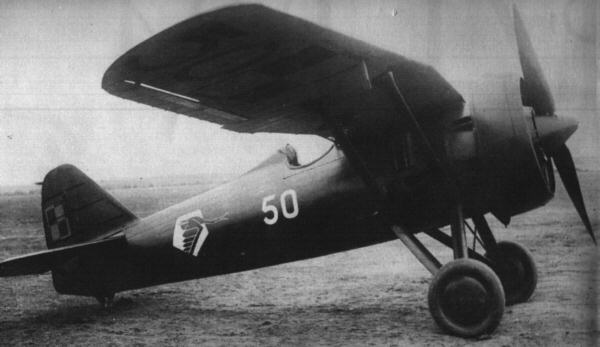
Caza polaco PZL P.7


El PZL P.7 experimentó un desarrollo paralelo al P.6 pero estaba equipado con un motor preparado para su actuación a elevada altitud y disponía de un fuselaje totalmente metálico. El motor seleccionado fue un Bristol Júpiter VII.F radial que proporciobana una potencia de  520 hp a 3.050 metros de altitud. El primer prototipo, designado P.7/I, realizó su primer vuelo en octubre de 1930 y disponía de una cubierta para el motor ajustado al casco. Esto originó un anillo Townend instsalado en el siguiente prototipo, el P.7/II.

Se completó un lote de preserie de 10 unidades P.7a en junio de 1931 y más tarde se ordenaron otros 139 aparatos más. Al entrar en servicio era un aparato equiparable a sus coetáneos pero la rápida carrera tecnológica en el campo de la aviación lo dejaron obsoleto rápidamente. El P.7a estaba armado con dos ametralladoras Vikers E de 7´7 mm y se diferenciaba de los prototipos en el carenado, cabina, alerones más cortos y las superficies de cola modificados. Entró en servicio en el invierno de 1932-33 y equipaba aún a tres escuadrones de caza en el momento de la invasión alemana el 1 de septiembre de 1939 ya que desde 1935 los P.7a estaba siendo sustituidos por el P.11 relegando a las otros aparatos a las unidades de instrucción de vuelo. 


Al estallar la guerra los 30 P.7a que aún quedaban en las unidades de caza se vieron involucrados rápidamente en la lucha. Otros 40 aparatos se encontraban encuadrados en las unidades de instrucción y 35 más en reserva o reparaciones, en total 106 P.7a. Los tres escuadrones eran el 123º Squadron, una unidad de persecución desplegada en los alrededores de Varsovia, el 151º y el 162º Squadrons que estaban asignados a unidades terrestres del ejército polaco. En cuanto empezaron las hostilidades de los 75 P.7a utilizados en unidades no de primera línea se utilizaron al menos 18 de ellos para poblar algunas unidades improvisadas. A pesar de que el P.7a era superados en velocidad por todos los aparatos alemanes, sus motores estaban muy gastados y disponía de un armamento totalmente inadecuado, y con tendencia a encasquillarse, lograron derribar un total de 7 aparatos alemanes (dos Heinkel He 111, dos Dornier Do 17, un Henschel Hs 126 y dos Bf 110) a cambio de perder 22 cazas P.7a en combate aéreo.

La mayoría de los P.7a  fueron destruidos durante la lucha de 1939, tanto en combate aéreo como en tierra y algunos aparatos evadiros alcanzaron Rumania pero no fueron usados en combate. Los que cayeron en manos alemanas fueron distribuidos en las unidades de instrucción de vuelo al igual que los que cayeron en manos soviéticas. En total se fabricaron 151 unidades, incluyendo los dos prototipos.


Fuentes:
CYNK, J. “History of the Polish Air Force 1918-1968” Osprey, 1972
CYNK, J. “Polish Aircraft, 1893-1939” Putnam & Company Ltd., 1971
EBERSPACHER, W. “PZL Fighters Part One - P.1 through P.8. (International Squadron Monograph 2)” Phalanx Publishing, 1995
KOPANSKI, T. “PZL P.7: Cz.2” AJ Press, 2001

English version

The PZL P.7 experienced a parallel development to P.6 but was equipped with an engine ready for her performance at high altitude and had a all-metal fuselage. The engine was selected radial Bristol Jupiter VII.F proporciobana a power of 520 hp at 3050 meters altitude. The first prototype, designated P.7/I, made its first flight in October 1930 and had an engine cover fitted to the hull. This caused a Townend ring instsalado the next prototype, the P.7/II.

He completed a 10-series batch P.7a units in June 1931 and later ordered over 139 other devices. Upon entering service was a device comparable to their peers but rapid technological race in the aviation field left him quickly obsolete. The P.7a was armed with two Vickers machine guns of 7'7 mm and E differed from the prototypes in the fairing, cabin, shorter wings and modified tail surfaces. It entered service in the winter of 1932-33 and even equipping three fighter squadrons at the time of the German invasion on September 1, 1939 and that since 1935 the P.7a was being replaced by relegating P.11 other devices to flight training units.


When war broke 30 P.7a who remained in hunting units were involved in the fight quickly. Another 40 machines were fitted in the units of instruction and 35 more in reserve or repairs, totaling 106 P.7a. The three squadrons were the 123rd Squadron, a unit of persecution deployed around Warsaw, the 151st and the 162nd Squadrons who were assigned to ground units of the Polish army. As hostilities began the 75 P.7a used in front-line units are not used at least 18 of them to populate some improvised units. Although the P.7a speed was exceeded in all German aircraft, their engines were very worn and had a totally inadequate weaponry, and prone to jam, to bring down a total of 7 German aircraft (two Heinkel He 111 two Dornier Do 17, a Henschel Hs 126 and two Bf110) in exchange for losing 22 fighters in aerial combat P.7a.

Most P.7a were destroyed during the fighting of 1939, both in air and on land combat and some appliances evadiros Romania reached but were not used in combat. Those who fell into German hands were distributed in the flight training units like those who fell into Soviet hands. Total of 151 units were produced, including the two prototypes.


Sources:
CYNK, J. “History of the Polish Air Force 1918-1968” Osprey, 1972
CYNK, J. “Polish Aircraft, 1893-1939” Putnam & Company Ltd., 1971
EBERSPACHER, W. “PZL Fighters Part One - P.1 through P.8. (International Squadron Monograph 2)” Phalanx Publishing, 1995
KOPANSKI, T. “PZL P.7: Cz.2” AJ Press, 2001

martes, 9 de julio de 2013

43M Zrínyi


Cañón de asalto húngaro 
43M Zrínyi


Ante el éxito alcanzado por los cañones de asalto alemanes los húngaros también quisieron disponer de un modelo de producción propia para poblar sus unidades acorazadas. El chasis elegido en este caso fue el del carro de combate Turán, también de producción nacional. Se fabricaron dos modelos, el primero fue el 44M Zrínyi I, que estaba armado con un cañón largo 43M de 75 mm pero que no pasó de su fase de prototipo. El otro modelo fue el 40/43M Zrínyi II que estaba armado con un cañón 40M L/20 de 105 mm. La configuración del Zrínyi II era la tradicional para esta clase de vehículos de apoyo a la infantería mientras que el Zrínyi I estaba más orientado al cometido anticarro.

La escasa produccitividad de la industria húngara provocó que tan solo fuesen completados entre 40 y 60 Zrínyi II entre agosto de 1943 y julio de 1944, a lo que habría que sumar el único Zrínyi I completado. Actualmente tan solo queda un ejemplar de Zrínyi II en el museo de Kubinka. Este vehículo fue capturado por las tropas soviéticas en Transilvania, entre septiembre y octubre de 1944 fue puesto de nuevo en servicio siendo enviado posteriormente a Moscú.

Los Zrínyi II fueron manufacturados por Manfred Weiss y alcanzaban un peso en orden de combate de 21´6 toneladas. Disponía de una tripulación de cuatro hombres y su blindaje oscilaba entre los 13 y 75 mm de espesor. Para su armamento principal, un cañón 40/43M L20 MÁVAG, tenía una previsión de 42 proyectiles. Contaba con un motor Manfred Weiss V8 de 260 hp que le permitía alcanzar los 43 Km/h en carretera con una autonomía de 220 Km. 


Fuentes:
BIRÓ, Á. “A 40/43. M Zrínyi–II rohamtarack fejlesztése és alkalmazása”
AXWORTHY, M. “Third Axis. Fourth Ally. Romanian Armed Forces in the European War, 1941-1945” Arms and Armour, London, 1995

English version

Given the success of the German assault guns Hungarians also wanted to have a production model to populate their own armored units. The frame chosen in this case was the chariot of Turan, also produced domestically. Two models were produced, the first was the 44M Zrínyi I, who was armed with a long barreled 75mm 43M but did not pass prototype stage. The other model was the 40/43M Zrínyi II who was armed with a barrel length of 105 mm 40M L/20. The configuration Zrínyi II was the traditional vehicle for this kind of support to the infantry while the Zrínyi I was more committed anti-tank oriented.

The poor Hungarian industry produccitividad caused were only completed between 40 and 60 Zrínyi II between August 1943 and July 1944, to which must be added the only Zrínyi I completed. Currently all that remains is a copy of Zrínyi II Kubinka Museum. This vehicle was captured by Soviet troops in Transylvania, between September and October 1944 was put back into service later being sent to Moscow.

The Zrínyi II were manufactured by Manfred Weiss and reached a weight bout by 21'6 tons. It had a crew of four men and their armor ranged between 13 and 75 mm thick. For their main weapons, a cannon 40/43M L20 MAVAG had a forecast of 42 rounds. It featured a V8 engine 260 Manfred Weiss hp that allowed him to reach the 43 km/h on the road with a range of 220 km


Sources:
BIRÓ, Á. “A 40/43. M Zrínyi–II rohamtarack fejlesztése és alkalmazása”
AXWORTHY, M. “Third Axis. Fourth Ally. Romanian Armed Forces in the European War, 1941-1945” Arms and Armour, London, 1995

lunes, 8 de julio de 2013

U-Flak, operaciones

Operaciones finales de los U-Flak


Tras las primeras experiencias con los nuevos U-Flak se reanudaron las operaciones con estos nuevos submarinos.

El U-441 salió de Brest el 8 de julio de 1943 y cuatro días más tarde fue atacado por tres Beaufighters (“A”, “B” y “V”) pertenecientes al 248º Sqadron. Durante el combate y a pesar del pesado fuego antiaéreo el U-441 resultó seriamente dañado causando la muerte a 10 hombres de la tripulación y heridas a otros 13 más. Al día siguiente el U-441 regresó a Brest para reparaciones y proporcionar atención sanitaria a sus heridos.

Por su parte el U-621 fue convertido en U-Flak en junio de 1943 después de que fuese dañado por el ataque de un Liberator (“Q”) del 224º Sqadron el 31 de mayo de 1943. El 29 de agosto de ese mismo año regresó al servicio pero en su quinta patrulla de más de un mes no tuvo enfrentamientos con el enemigo. En su siguiente salida fue dañado por el ataque de otro Librator (“A”) del 59º Sqadron el 13 de enero de 1944. Tras regresar a su base se desmanteló el armamento antiaéreo extra.


Fuentes:
NIESTLE, A. “German U-Boot losses during World War II ” Naval Institute Press 1998
BLAIR, C. “Hitler´s U-Boat war” Random House, 1998
WYNN, K. “U-Boat operations of the Second World War” Naval Institute Press 1998

English version

After the first experiences with the new U-Flak resumed operations with these new submarines.

The U-441 left Brest on July 8, 1943 and four days later was attacked by three Beaufighters ("A", "B" and "V") belonging to 248º sqadron. During combat despite the heavy flak U-441 was seriously damaged killing 10 men of crew and injuring 13 more. The next day the U-441 returned to Brest for repairs and provide health care to their wounded.

For his part, U-621 was converted to U-Flak in June 1943 after it was damaged by the attack of a Liberator ("Q") of 224° sqadron on May 31, 1943. On August 29 of that year but returned to service in its fifth patrol over a month had no confrontations with the enemy. In his next start was damaged by the attack of another Librator ("A") of the 59th sqadron on January 13, 1944. After returning to base was dismantled additional anti-aircraft weapons.


 Beaufighters attack

Sources:
NIESTLE, A. “German U-Boot losses during World War II ” Naval Institute Press 1998
BLAIR, C. “Hitler´s U-Boat war” Random House, 1998
WYNN, K. “U-Boat operations of the Second World War” Naval Institute Press 1998