Buscar este blog

jueves, 19 de julio de 2012

Sd.Kfz 232


Schwerer Panzerspähwagen 
Sd.Kfz 232


El vehículo de reconocimiento pesado SdKfz 232 (8 Rad) fue producido desde 1938 hasta 1943 cuando fue reemplazado por el mejor armado Sd.Kfz 234/2 Puma. Sin embargo tras ser reemplazado en sus labores de primera línea continuó siendo de gran utilidad ya que fueron reutilizados como vehículos de mando con nuevos equipos de radio y una antena en dosel más moderna y compacta. Estos vehículos son conocidos como Sd.Kfz 232 (Fu) (8 Rad). Muchos otros fueron asignados a labores de seguridad en retaguardia, vigilancia ferroviaria y lucha antipartisana.

Como sucedía con su antecesor, el Sd.Kfz 231, se fabricó en dos versiones, uno con seis ruedas (6 Rad) y otro equipado con ocho (8 Rad). Las experiencias en combate revelaron que el vehículo era uno de los mejores de su clase y sus tripulaciones estaban satisfechas por su movilidad aunque en terreno blando disminuía su tracción. A pesar de sus 8.300 Kg  era capaz de desarrollar una velocidad punta de 85 Km/h en carretera gracias a su motor BussingNAG L8V-GS de 8 cilindros con 150 hp y una más que aceptable autonomía de 300 Km. En su contra jugaban los 2,9 metros de altura que le dificultaba mucho su ocultación aunque las dotaciones se las ingeniaban para ocultarse.

El blindado estaba armado con un cañón automático KwK 30 L/55 de 20 mm y una ametralladora coaxial MG 34 de 7´92 mm. Su blindaje fue aumentado en su parte frontal en 1940 con planchas de 8 mm de espesor ya que había sido vulnerable al fuego pesado enemigo. El vehículo contaba con una tripulación de 4 hombres. En total se completaron 1.235 vehículos.


Fuentes:
BISHOP, C. “The Encyclopedia of Weapons of World War II Sterling Publishing, 2002
PERRET, B. “German armoured cars and Reconnaissance half Tracks 1939-1945” Osprey, 1999
SCHEIBERT, H. “Puma and Other German Heavy Reconnaissance Vehicles 1994
SCHEIBERT, H. “Deutsche Schwere Panzerspähwagen Waffen Arsenal Nº 89, 1984

English version

The heavy reconnaissance vehicle SdKfz 232 (8 Rad) was produced from 1938 until 1943 when he was replaced by the better armed Sd.Kfz 234/2 Puma. But after being replaced in their frontline work continued to be very useful as they were reused as command vehicles with new radio equipment and antenna in more modern and compact canopy. These vehicles are known as Sd.Kfz 232 (Fu) (8 Rad). Many others were assigned to security duties in the rear, monitoring and combating anti-partisan railway.

German Heavy Armoured Vehicle Schwerer Panzerspahwagen (8-Rad) (Fu)

As with its predecessor, the Sd.Kfz 231, was manufactured in two versions, one with six wheels (6 Rad) and one equipped with eight (8 Rad). The combat experience revealed that the vehicle was one of the best in their class and their crews were met by their mobility on soft ground but decreased traction. Despite its 8,300 kg was able to develop a top speed of 85 km/h on the highway with its engine BussingNAG L8V-GS 8-cylinder with 150 hp and a more than acceptable range of 300 km in playing against the 2,9 feet long, which disturbs her concealment but the allocations are contrived to hide.

The shield was armed with an automatic gun KwK 30 L/55 20 mm gun and a coaxial MG 34, 7'92 mm. His armor was up-front in 1940 with plates of 8 mm thick and had been vulnerable to heavy enemy fire. The vehicle had a crew of 4 men. A total of 1,235 completed vehicles.


Sources:
BISHOP, C. “The Encyclopedia of Weapons of World War II Sterling Publishing, 2002
PERRET, B. “German armoured cars and Reconnaissance half Tracks 1939-1945” Osprey, 1999
SCHEIBERT, H. “Puma and Other German Heavy Reconnaissance Vehicles 1994
SCHEIBERT, H. “Deutsche Schwere Panzerspähwagen Waffen Arsenal Nº 89, 1984

miércoles, 18 de julio de 2012

Experten alemanes: Franz-Josef Beerenbrock

Leutnant Franz-Josef Beerenbrock


Alcanzó un registro de 117 victorias en unas 400 misiones, todas ellas en el frente oriental, incluyendo la destrucción de 12 Il-2 Sturmoviks. El 1 de octubre de 1938 se unió a un regimiento de artillería antiaérea con 18 años pero en 1939 recibió entrenamiento como piloto. En marzo de 1941 fue transferido al JG 51 con el rango de Unteroffizier y asignado al 12./JG 51 voló como Rottenflieger del Oberleutnant Karl-Gottfried Nordmann (78 victorias). Su primera victoria la obtuvo el 24 de junio al derribar un bombardero soviético SB-2.

En julio logró un total de 13 victorias más y en agosto ya estaba sirviendo en la Stabstaffel del IV./JG 51, reclamando al menos 20 victorias (la victoria números 38, 39 y 40 el día 30 de agosto). A principios de diciembre ya había alcanzado las 50 victorias, siendo acreedor de la Ritterkreuz (6 de octubre con 42 victorias). Durante junio y julio de 1942 Beerenbrock derribó 26 aparatos soviéticos más (9 LaGG-3, 5 MiG-3, 1 YaK-1, 2 Il-16, 3 P-2 y 6 Il-2) sumando un total de 102 victorias. Recibió el ascenso a Feldwebel y posteriormente la Deutsches Kreuz in Gold el 17 de junio de 1942 mientras que con el rango de Oberfeldwebel recibiría la Eichenlaub y fue promocionó a Leutnant el 3 de agosto. Por estas fechas era el piloto de caza más exitoso del JG 51.

En noviembre estaba sirviendo como Staffelkapitän del 10./JG 51 cuando el día 9 derribó 3 aparatos enemigos pero su aparato fue alcanzado y tuvo que realizar un aterrizaje de emergencia tras las líneas enemigas con su Messerschmitt Bf 109 F-2 (W.Nr. 6779) “12 Blanco” y fue capturado. Beerenbrock regresó a Alemania a mediados de diciembre de 1949.

 Bf 109 F-2 con 103 barras de victorias.

Fuentes:
WEAL, J. “Bf 109 Aces of the Russian Front.” Osprey, 2001
WEAL, J. “More Bf 109 Aces of the Russian Front.” Osprey, 2007
WEAL, J. “Jagdgeschwader 51 'Mölders'” Osprey, 2006
MUSCIANO, W. “Messerschmitt Aces”  Tab Books, 1989

English version

It reached a record of 117 victories in 400 missions each, all on the Eastern Front, including the destruction of 12 Il-2 Sturmoviks. On October 1, 1938 he joined a regiment of anti-aircraft artillery at 18 but in 1939 he trained as a pilot. In March 1941 he was transferred to JG 51 with the range and assigned to 12./JG Unteroffizier 51 flew as Rottenflieger of Oberleutnant Karl-Gottfried Nordmann (78 wins). His first victory was the June 24 shooting down a Soviet SB-2 bomber.

In July reached a total of 13 victories in August and was already serving in the Stabstaffel of IV. / JG 51, claiming at least 20 wins (victory number 38, 39 and 40 on 30 August). In early December had reached 50 victories, being creditors of the Ritterkreuz (Oct. 6 with 42 wins). During June and July 1942 Beerenbrock Soviet aircraft shot down 26 more (9 LaGG-3, 5 MiG-3, 1 Yak-1, 2 Il-16, 3 P-2 and 6 Il-2) for a total of 102 victories. Was promoted to Feldwebel and then the Deutsches Kreuz in Gold on June 17, 1942 while with the rank of Oberfeldwebel receive the Eichenlaub and was promoted to Leutnant on 3 August. At this time was the most successful fighter pilot of JG 51.

In November he was serving as the 10./JG Staffelkapitän 51 when on 9 enemy aircraft shot down in March but his aircraft was hit and had to make an emergency landing behind enemy lines with his Messerschmitt Bf 109 F-2 (W.Nr. 6779) "12 White" and was captured. Beerenbrock returned to Germany in mid-December 1949.


Sources:
WEAL, J. “Bf 109 Aces of the Russian Front.” Osprey, 2001
WEAL, J. “More Bf 109 Aces of the Russian Front.” Osprey, 2007
WEAL, J. “Jagdgeschwader 51 'Mölders'” Osprey, 2006
MUSCIANO, W. “Messerschmitt Aces”  Tab Books, 1989

martes, 17 de julio de 2012

HMS Repulse

El hundimiento del HMS Repulse

  
El HMS Repulse era un crucero de batalla de la clase Renown de la Royal Navy británica construido durante la I Guerra Mundial. Tras varios retrasos en su construcción fue entregado unos meses después de la Batalla de Jutlandia de 1916. En el momento de su botadura El HMS Repulse y su gemelo, el HMS Renown, eran los buques de su clase más rápidos del momento. El Repulse participó solo en un combate durante la Gran Guerra, durante la Batalla de la Bahía Helgoland en 1917.

Durante el periodo de entreguerras fue reconstruido dos veces mejorando su blindaje entre otros aspectos siendo la segunda de ellas una remodelación más profunda. En los primeros compases de la Segunda Guerra Mundial se dedicó a la caza de los corsarios alemanes y en la protección marítima. Entre abril y junio de 1940 participó en la campaña de Noruega y al año siguiente en la búsqueda del acorazado alemán Bismarck.

En noviembre de 1941 fue asignado a la Fuerza Z que tenía como objetivo disuadir a Japón de su política expansionista y proteger las posesiones británicas en oriente. El 9 de diciembre de 1941 esta Fuerza se dirigía a interceptar la flota japonesa de desembarco en la Península de Malaca, en el Golfo de Siam. La fuerza británica fue detectada por la aviación japonesa y por submarinos siendo atacados desde el aire poco después. 

 Fotografía aérea de la fuerza Z tomada por los japoneses al momento de comenzar el ataque con bombas, El Repulse aparece en la parte inferior de la fotografía.

El Repulse fue alcanzado por primera vez por una bomba de aviación a las 11:00 horas en la zona de popa. Una segunda le alcanzó en la segunda chimenea que destruyó el hangar de hidroaviones pero ninguna logró penetrar la cubierta de protección del crucero. Con gran pericia su comandante, el capitán de navío W.G. Tennant, logró esquivar varios ataques aéreos y otros tantos torpedos pero finalmente un torpedo impactó a las 11:50 horas en la banda de babor. A pesar de todo la protección del Repulse resistió la explosión y ni las máquinas ni el timón resultaron dañados. Sin embargo en el siguiente ataque no tendría tanta suerte. Otro torpedo alcanzó y destruyó el sistema de gobierno haciéndole ingobernable y sellando su destino. De este modo otros dos torpedos más le alcanzaron a babor y uno más a estribor abriendo fuertes vías de agua.

Con cinco torpedos encajados el Repulse comenzó a escorarse rápidamente a babor yéndose a pique finalmente a las 12:33 arrastrando con él a 513 de sus 1.181 tripulantes. Los supervivientes fueron recogidos por los destructores de escolta que también tuvieron que recoger a los náufragos del HMS Prince of Wales que también fue hundido en los ataques aéreos. Ambos navíos tuvieron el dudoso honor de convertirse en los primeros buques de línea hundidos por la acción de la aviación en alta mar. Hasta el día de su hundimiento el Repulse no había recibido ningún daño en combate.


Fuentes:
JORDAN, J. “Acorazados y cruceros de batalla en la Segunda Guerra Mundial” 1995
STEPHEN, M. “Sea Battles in Close-Up: World War 2 Anápolis, 1988
MATTHEWS, A. “Sailors' Tales: Life Onboard HMS Repulse During World War Two

English version

HMS Repulse was a Renown class cruiser battle of the Royal Navy built during the First World War. After several delays in its construction was delivered a few months after the Battle of Jutland, 1916. At the time of her launch HMS Repulse and her sister ship HMS Renown, were the vessels of their class's fastest time. The Repulse participated only in combat during the Great War, during the Battle of Helgoland Bay in 1917.

During the interwar period was rebuilt twice to improve their armor among other things is the second of them a deeper remodeling. In the early stages of World War II was dedicated to the hunt for German raiders and maritime security. Between April and June 1940 participated in the Norwegian campaign and the following year in search of the German battleship Bismarck.

In November 1941 he was assigned to Force Z which aimed to deter Japan from its expansionist policy and protect the British possessions in the East. On December 9, 1941 this force was heading to intercept the Japanese fleet landing in the Malay Peninsula in the Gulf of Siam. The British force was detected by Japanese aircraft and submarines being attacked from the air shortly after.

HMS Repulse (1919)

The Repulse was hit first by an aviation bomb at 11:00 hours in the stern. A second hit him in the second fire that destroyed the seaplane hangar but none managed to penetrate the protective cover of the cruise. With great skill its commander, Captain W.G. Tennant, managed to dodge several air strikes and as many torpedoes but finally a torpedo hit at 11:50 hours on the port side. Yet the protection of the Repulse resisted the explosion and not machines or the rudder were damaged. However in the next attack would not have much luck. Another torpedo hit and destroyed the system of government making it ungovernable and sealing his fate. Thus two more torpedoes hit him one more port and starboard strong opening waterways.

With five torpedoes fitted the Repulse quickly began to heel over to port finally foundering at 12:33 dragging him to 513 of its 1,181 crew members. The survivors were picked up by the escorting destroyers also had to collect the shipwrecked HMS Prince of Wales was also sunk in air attacks. Both ships had the dubious honor of becoming the first ship sunk by the action line of aviation at sea. To this day it sank the Repulse had received no damage in combat.


Sources:
JORDAN, J. “Acorazados y cruceros de batalla en la Segunda Guerra Mundial” 1995
STEPHEN, M. “Sea Battles in Close-Up: World War 2 Anápolis, 1988
MATTHEWS, A. “Sailors' Tales: Life Onboard HMS Repulse During World War Two

lunes, 16 de julio de 2012

Aviación de caza francesa: Potez 631 (II)

Caza nocturno Potez 631

 
En muchos aspectos el caza nocturno Potez 631 se parece al Bristol Blenheim de la RAF, muy similar en tamaño y prestaciones que además fueron concebidos también para el bombardeo ligero. El prototipo para caza nocturno voló por primera vez en 1937 bajo la designación de Potez 631-0 aunque no despertó gran entusiasmo entre las autoridades militares francesas y su inmovilismo político. No fue hasta junio de 1938 cuando se emitió la primera orden para la producción de este caza nocturno fabricándose un total de 207 aparatos.

El 1 de abril de 1939 el Armée de l'Air había recibido 88 aviones de este tipo de los cuales solo 20 estaban en servicio. Para el mes de mayo los Groupes de Chasse de Nuit GCN III/l y II/4 más el CG II/8, fueron equipados con unos 30 cazas de este tipo mientras que en Yibuti se desplegaron otros cuatro aparatos más. Cuando estallaron las hostilidades habían sido entregados 206 aparatos de este tipo sumándose al GCN 1/13 y GCN 11/13 así como a 7 escuadrones de caza. Algunos de estos aparatos serían trasladados posteriormente a la Aeronavale. 
 
Cuando los alemanes lanzaron su ofensiva sobre el oeste varias unidades de Potez 631, tanto de caza diurna como nocturna, se encontraban en acción aunque la falta de radares impidieron más éxitos durante las acciones nocturnas. En los primeros 11 días de lucha la Flotille Aeronavale F habían derribado 12 aparatos alemanes a cambio de 8 propios pero pronto recibieron órdenes de abandonar la lucha nocturna para sumar sus esfuerzos en ataques diurnos a tierra dónde sufrieron fuertes pérdidas por el fuego antiaéreo alemán. 


Otras pérdidas se sufrieron debido a la similitud del Potez 631 con el Messerschmitt Bf 110 alemán siendo objetivo del fuego antiaéreo amigo, se estima que hasta el 30% de los aviones franceses habían sido derribados por error. En total los cazas nocturnos Potez 631 derribaron 29 aparatos alemanes durante la batalla de Francia pero a costa de perder 93 aviones propios. Del resto, unos 110 se encontraban en la zona de la Francia libre en el momento del armisticio pero su número se redujo rápidamente a causa de la crónica falta de repuestos y del traslado del REC 3/13 a Túnez en junio de 1941.

Fuentes:
BREFFROT, D. “French Aircraft from 1939 to 1942, Vol.2: from Dewoitine to Potez” Histoire & Collections, 2005
BRINDLEY, J. “French Fighters of World War Two” Lacy Publishers Ltd., 1971
JACKSON, R. “Air War over France 1939-40
MARCHAND, P. “Les Potez 63, Les Ailes de Gloire No.9” Editions d'Along, 2003
EHREMGART, C. “Le Potez 63 et dérivés Aéro-Editions, November 2005
PELLETIER, A. “ French Fighters of World War II.” Squadron/Signal, 2002

English version

In many respects the Potez 631 night fighter resembles the RAF Bristol Blenheim, very similar in size and performance were also designed also for light bombing. The night fighter prototype first flew in 1937 under the designation Potez 631-0 but not aroused much enthusiasm among the French military authorities and political stagnation. It was not until June 1938 when it issued the first order for the production of this night fighter being manufactured a total of 207 devices.

On April 1, 1939 the Armee de l'Air had received 88 aircraft of this type of which only 20 were in service. For the month of May Groupes de Chasse de Nuit
GCN III/l and II/4 plus the GC II/8, were equipped with about 30 fighters of this type while in Djibouti were deployed four more devices. When hostilities broke out had been handed over 206 aircraft of this type joining the GCN 1/13 and GCN 11/13 to 7 and fighter squadrons. Some of these devices would be subsequently transferred to the Aeronavale.


When the Germans launched their offensive on the west several units of Potez 631, hunting both day and night, were in action but the lack of radar prevented more success during the night actions. In the first 11 days of fighting the F Aeronavale Flotille had shot down 12 aircraft in exchange for 8 Germans themselves but soon received orders to leave the fight night to add their efforts to land where daytime attacks suffered heavy losses by German flak.

Other losses were suffered due to the similarity of the Potez 631 with the German Messerschmitt Bf 110 to be targets of flak friend, it is estimated that up to 30% of French planes had been shot down by mistake. In total Potez 631 night fighters shot down 29 German units during the Battle of France but at the cost of losing 93 aircraft themselves. Of the remainder, about 110 were in the area of ​​the Free French at the time of the armistice but their numbers declined rapidly because of the chronic lack of spare parts and the transfer of REC 3/13 to Tunisia in June 1941.

 Potez 631 C3  ECN I/13

Sources:
BREFFROT, D. “French Aircraft from 1939 to 1942, Vol.2: from Dewoitine to Potez” Histoire & Collections, 2005
BRINDLEY, J. “French Fighters of World War Two” Lacy Publishers Ltd., 1971
JACKSON, R. “Air War over France 1939-40
MARCHAND, P. “Les Potez 63, Les Ailes de Gloire No.9” Editions d'Along, 2003
EHREMGART, C. “Le Potez 63 et dérivés Aéro-Editions, November 2005
PELLETIER, A. “ French Fighters of World War II.” Squadron/Signal, 2002

viernes, 13 de julio de 2012

Relatos de guerra: Visión de infrarrojos


Relatos de guerra: Visión infrarroja


En la primavera de 1945 la División Panzer Clausewitz vio combate en el área de Fallersleben al recibir ordenes de combatir en su camino al sur, en dirección a las montañas Harz. Esta unidad, aunque organizada como División Panzer, tenía muy pocos medios acorazados en sus filas. Dos de sus PzKpfw V Panther estaban equipados con visores infrarrojos tal y como consta en sus informes.

El 21 de abril de 1945 la unidad entró en combate contra fuerzas norteamericanas. Los últimos diez carros de combate de la Clausewitz iban seguidos por un semioruga Sd.Kfz 234/1 armado con un cañón de 20 mm. Los blindados alemanes se acercaron a una posición anticarro norteamericana equipada con cañones de 76 mm situados en el canal Weser/Elba. Los norteamericanos estaban alerta y dispararon bengalas para iluminar la noche para ver al enemigo y disparar sobre él. El Panther que abría la marcha fue alcanzado y se deslizó dentro de una zanja hecho que detuvo el ataque.

Poco más tarde el Panther equipado con infrarrojos se puso a cubierto para localizar los cañones anticarro americanos, una vez localizados realizó una veintena disparos. Toda la posición fue destruida mientras que los artilleros e infantería superviviente huyó presa del pánico. Los Panther equipados con infrarrojos continuaron con el ataque destruyendo varios camiones y otros vehículos de apoyo que saltaron por los aires. El ataque fue un éxito revelando la enorme posibilidad de la tecnología infrarroja en el campo de  batalla moderno.

 Sd.Kfz 251/20 Uhu

Indudablemente el novedoso sistema alemán de visión infrarroja tenía un sin fin de posibilidades en el campo de batalla moderno, otorgaba una ventaja devastadora sobre el enemigo. Destruir sin ser visto ni atacado, ventaja que aumentaba en valor cuando el enemigo era muy superior en número. Un lote completo de Panther fueron fabricados para su uso con sistemas infrarrojos, sin embargo fueron modificados posteriormente para su uso normal eliminándose el sistema.

Un pelotón británico equipado con carros de combate Comet fue atacado en abril de 1945 ya de noche cerrada  con algunos Panther equipados con infrarrojos. Se desencadenó un  corto y violento combate en el que todo el pelotón británico fue destruido

Fuentes:
CULVER, B. “Panther in action” Squadron/Signal, 1975
CULVER, B. “Panther in detail” Ryton, 1998
JENTZ, T. “Panzerkampfwagen Panther - Ausf.G (Panzer Tracts, # 5-3” Panzer Tracts, 2004

English version

"In the spring of 1945 Panzer Division Clausewitz saw combat in the area of ​​Fallersleben to receive orders to fight on their way south towards the Harz Mountains. This unit, although organized as a Panzer Division, had very few means battleships in their ranks. Two of his PzKpfw V Panther were equipped with infrared goggles as stated in their reports.

On April 21, 1945 the unit went into combat against U.S. forces. The last ten tanks of Clausewitz were followed by a half-track Sd.Kfz 234/1 armed with a 20mm cannon. The German tanks approached a U.S. position equipped with antitank guns of 76 mm located in the channel Weser / Elbe. The Americans were alert and fired flares to illuminate the night to see the enemy and shoot him. The Panther was hit led the way and slid into a ditch made stopped the attack.


A little later the Panther was equipped with infrared cover to locate the American anti-tank guns, once found a dozen shots made. The whole position was destroyed while the surviving gunners and infantry fled in panic. The IR equipped Panthers continued the attack destroying several trucks and support vehicles that were blown up. The attack was a huge success, revealing the possibility of infrared technology in the modern battlefield
"

Undoubtedly the new German system of infrared vision had endless possibilities in the modern battlefield, gave a devastating advantage over the enemy. Destroy without being seen or attacked, it increased in value advantage when the enemy was much superior in number. A whole batch of Panther were constructed for use with infrared systems, but later amended to normal use eliminating the system.

"A British platoon equipped with Comet tanks was attacked in April 1945 and closed at night with some Panther equipped with infrared. It triggered a short and violent battle in which the entire British squad was destroyed "


Sources:
CULVER, B. “Panther in action” Squadron/Signal, 1975
CULVER, B. “Panther in detail” Ryton, 1998
JENTZ, T. “Panzerkampfwagen Panther - Ausf.G (Panzer Tracts, # 5-3” Panzer Tracts, 2004

jueves, 12 de julio de 2012

La flota soviética del Báltico


La flota soviética del Báltico


Las fuerzas navales soviéticas estacionadas en el Báltica era denominada oficialmente como Flota del Báltico Bandera Roja (Krasnoznamyonnyy Baltiyskiy Flot, KBF). En sus primeras operaciones sufrieron fuertes pérdidas al evacuar a las tropas de Tallin entre el 28 y el 29 de agosto. A pesar de esto cuando las tropas alemanas completaron el cerco de Leningrado aún tenían buques de guerra para ofrecer su apoyo de fuego en la defensa de la ciudad.

Entre los barcos más importantes se encontraban el acorazado Marat y Revolución de Octubre. Ambos poseían una batería principal de 12 cañones de 305 mm capaces de arrojar un proyectil de 470 Kg de peso a una distancia de 24 kilómetros. También se encontraban disponibles los cruceros pesados Kirov y Maximo Gorki que tenían como batería principal de 9 cañones de 180 mm, capaces de arrojar proyectiles de 97 Kg a 33 kilómetros. También se encontraba el crucero pesado Petropavlovsk, que era el anterior Lutzow alemán comprado a Alemania un año antes, aunque este buque se encontraba incompleto.

Estos eran los buques más importantes aunque la KBF disponía de 7 destructores de la clase Gnevny y más buques de menor tamaño. A su poder de fuego se sumaba una batería ferroviaria con cuatro cañones de 180 mm y las baterías defensivas de Toksovo (un cañón 406 mm, uno de 356 mm y uno doble de 305 mm). 

 Acorazado Revolución de Octubre

Pronto los alemanes minaron las aguas del Golfo de Finlandia cerrando aún más el cerco sobre Leningrado y la KBF. La amenaza de las minas unida a la escasez de combustible dejaron inmovilizados a los buques de mayor tamaño. Desde sus posiciones fijas podían batir objetivos enemigos a gran distancia aunque los alemanes encontraron su fuego muy impreciso. Menos del 30% del fuego naval soviético contó con la ayuda de un observador. A pesar de todo la KBF descargó más de 25.000 disparos contra las fuerzas terrestres alemanas en septiembre de 1941, provocando retrasos en las operaciones de cerco.

Durante los casi 900 días de asedio la KBF proporcionó más de 125.000 marineros para combatir como unidades terrestres de infantería. Con ellos se nutrieron 9 brigadas de fusileros, 1 Regimiento de esquiadores, 38 batallones independientes y 32 baterías de artillería. La 1º Brigada naval fue aniquilada en 1941 mientras que la 2º, 5º y 6º ayudó a sostener la cabeza de puente de Oranienbaum ante los contraataques alemanes. Por su parte, la 4º Brigada naval defendió la carretera sobre el hielo del lago Ladoga en el primer invierno de la guerra pasando todo el invierno sobre posiciones sobre el hielo del lago.

 Crucero Kirov

Fuentes:
ASELUS, G. “The rise and fall of the Soviet Navy in the Baltic, 1921-1941” Routledge, 2005
SHIROKORAD, A . “The Ships and Boats of the USSR Navy, The Period of 1939 – 1945

English version

Soviet naval forces stationed in the Baltic was officially named as Red Banner Baltic Fleet (Krasnoznamyonnyy Baltiyskiy Flot, KBF). In its first operations suffered heavy losses to evacuate troops in Tallinn from 28 to 29 August. Despite this, when German troops completed the siege of Leningrad warships had yet to provide fire support in defense of the city.

Among the most important ships were the battleship Marat and the October Revolution. Both possessed a main battery of 12 cannons of 305 mm capable of throwing a projectile of 470 Kg at a distance of 24 kilometers. Also available were heavy cruisers Kirov and Maxim Gorky who had as main battery of 9 guns of 180 mm, capable of throwing projectiles from 97 kg to 33 kilometers. He also was the heavy cruiser Petropavlovsk, which was the former German Lutzow bought Germany a year earlier, although the ship was incomplete.

 The Zheleznyakov destroyer

These were the largest ships available although KBF 7 Gnevny class destroyers and smaller vessels. The firepower was added a railway battery with four guns of 180 mm and defensive batteries Toksovo (406 mm cannon, one double and one 356 mm 305 mm).

Soon the Germans mined the Gulf of Finland further closing the siege on Leningrad and KBF. The mine threat coupled with fuel shortages left immobilized to larger vessels. From their fixed positions could beat far away enemy targets even if the Germans found their fire very inaccurate. Less than 30% of Soviet naval gunfire was assisted by an observer. Despite all the KBF downloaded more than 25,000 shots against German ground forces in September 1941, causing delays in siege operations.

During the nearly 900 days of siege the KBF provided more than 125,000 sailors to fight as infantry ground units. With them were fed 9 rifle brigades, 1 regiment of skiers, 38 independent battalions and 32 batteries of artillery. The 1st Brigade was annihilated in 1941 naval whereas 2, 5 and 6 helped to hold the bridgehead against German counterattacks Oranienbaum. Meanwhile, the 4th Brigade defended naval road on the ice of Lake Ladoga in the first winter of the war going on all winter positions on the ice of the lake.


Sources:
ASELUS, G. “The rise and fall of the Soviet Navy in the Baltic, 1921-1941” Routledge, 2005
SHIROKORAD, A . “The Ships and Boats of the USSR Navy, The Period of 1939 – 1945

miércoles, 11 de julio de 2012

Blindado Humber

La serie Humber


Los blindados de fabricación británica Humber fueron los más construidos durante la II Guerra Mundial manteniéndose en servicio durante toda la guerra como principal vehículo de reconocimiento ligero obteniendo buenos resultados en este rol.

La empresa que recibió el encargo de su construcción fue Rootes Group y el diseño final fue, básicamente, una mezcolanza de elementos ya existentes combinados entre sí. El chasis era esencialmente el del tractor de artillería Karrier KT 4 y el cuerpo del Guy Armoured Car cuyo primer prototipo apareció en 1938. Sin embargo la producción de este último estaba teniendo problemas, por su parte el KT 4 estaba ya en plena producción sobre todo destinados al Ejército indio.

En 1940 se emitió la primera orden de producción con un lote inicial de 500 vehículos para el Ejército británico. Los primeros ejemplares de Humber, cuya producción comenzó en 1941, resultaron ser idénticos al Guy, hasta tal punto que tenía los mismos problemas de blindaje que este. El Humber Mk.I constituyó la versión inicial de este vehículo armado con dos ametralladoras Besa, una de 15 mm y otra de 7´92 mm. La tripulación la componían tres hombres; conductor, artillero y comandante. De esta versión inicial se construyeron unos 300 vehículos.

 Mk I. muy similar al Guy Mk IA Armoured Car

Versiones

MarK I AA/Quad AA
Este modelo montaba cuatro ametralladoras BESA de 7,92 mm y tenía la suficiente elevación como para ser utilizado como montaje ligero antiaéreo. Fue utilizado en este cometido hasta que pronto se relegó a otras funciones ya que su función era menos necesaria a medida que avanzaba la contienda.

MarK II
El principal cambio lo experimentó en la torreta, también se mejoró el blindaje en el puesto del conductor y el radiador. Se completaron un total de 440 vehículos de este tipo.

Mark II OP
Derivado de versiones anteriores destinado para la observación. Armado con dos ametralladoras BESA de 7,92 mm.

Mark III
Torreta diseñada para tres tripulantes y con previsión para un operador de radio que liberaba al comandante del vehículo de estas labores. El armamento principal era simulado para dar cabida al potente equipo de radio y su generador. Su producción concluyó a finales de 1942 tras haberse completado 1.650 vehículos.

Mark IV
Esta versión esta equipada con el cañón estadounidense M5 o M6 de 37 mm de alta velocidad en sustitución del BESA de 15 mm. El aumento del tamaño del cañón provocó también el rediseño de la torreta. Se completaron un total de 2.000 vehículos de este tipo.


Estos vehículos fueron utilizados en los desiertos norteafricanos desde finales de 1941 por el 11º Húsares y otras unidades. También fueron utilizados en Europa por las unidades de reconocimiento, tanto por unidades británicas como canadienses. Algunos Mark IV fueron capturados por el Aufklärungs Abt de la 9º SS Panzer Division Hohenstaufen en Armhem.

Fuentes:
FORTY, G. “World War Two Armoured Fighting Vehicles and Self-Propelled Artillery” Osprey, 1996
MOSCHANSKIY, I. “Armored vehicles of the Great Britain 1939–1945 part 2” Modelist-Konstruktor, 1999

English version

The British-made armored Humber were most built during World War II remained in service throughout the war as the main light reconnaissance vehicle performing well in this role.

The company was commissioned its construction was Rootes Group and the final design was basically a hodgepodge of existing elements in combination. The chassis was essentially an artillery tractor Karrier KT 4 and the body of the Armoured Car Guy whose first prototype appeared in 1938. However the production of the latter was having problems, meanwhile the KT 4 was already in full production especially for the Indian Army.


In 1940 he issued the first production order with an initial batch of 500 vehicles for the British Army. The first copies of the Humber, which started production in 1941, found to be identical to Guy, to the point that had the same problems that armor. The Humber Mk.I was the initial version of this vehicle armed with two machine guns Besa, a 15 mm and a 7'92 mm. The crew consisted of three men, driver, gunner and commander. This initial version was built about 300 vehicles.

Versions

MarK I AA / AA Quad
This model mounted four machine guns of 7.92 mm BESA and had sufficient elevation to be used as light anti-aircraft mount. It was used in this role until soon be relegated to other duties because its function was less necessary as the race progressed.

MarK II
The main change was experienced in the turret, the armor was also improved in the driver's seat and radiator. Completed a total of 440 such vehicles.


Mark II OP
Derived from earlier versions designed to observe. Armed with two machine guns of 7.92 mm BESA.

Mark III
Turret designed for three crew members and with provision for a radio operator who freed the vehicle commander of this work. The main armament was simulated to accommodate the powerful radio equipment and your generator. Its production ended in late 1942 after the completion of 1,650 vehicles.


Mark IV
This version is equipped with the M5 or M6 U.S. barrel 37-mm high-speed in place of BESA 15 mm. The enlarged barrel also led the redesign of the turret. Completed a total of 2,000 such vehicles.

These vehicles were used in the North African desert since late 1941 by the 11th Hussars and other units. They were also used in Europe for reconnaissance units, both British and Canadian units. Mark IV Some were captured by the Aufklärungs Abt the 9th SS Panzer Division Hohenstaufen at Armhem.


Sources:
FORTY, G. “World War Two Armoured Fighting Vehicles and Self-Propelled Artillery” Osprey, 1996
MOSCHANSKIY, I. “Armored vehicles of the Great Britain 1939–1945 part 2” Modelist-Konstruktor, 1999

martes, 10 de julio de 2012

StuG III Ausf A

Sturmgeschütz III Ausf A


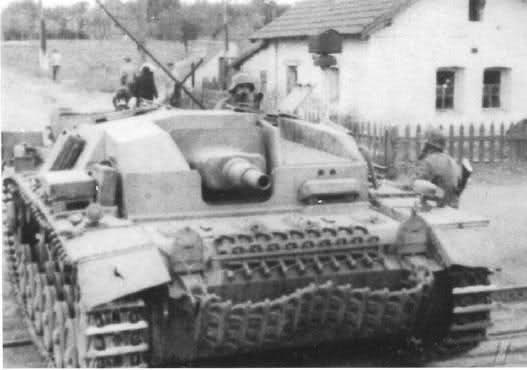
El Sturmgeschütz III Ausf A constituyó la primera versión de este versátil cañón de asalto y su origen se remonta a una orden del 15 de junio de 1936 que solicitaba un vehículo para el apoyo cercano a la infantería. El contrato lo obtuvo Daimler-Benz y debía ser capaz de portar un cañón de 75 mm en una superestructura fija, sin torreta, y con una capacidad de giro de 25º a cada lado. La ausencia de torreta se traducía inmediatamente en un peso menor que se ganaba para el blindaje frontal y, además, un perfil muy bajo lo que le facilitaba la ocultación.

Pronto se completaron cinco prototipos en 1937, denominados Serie 0, que usaron el bastidor de un PzKpfw III Ausf B recibiendo el probado obús L/24 de 75 mm como armamento principal. Estas piezas fueron heredadas de los primeros modelos de PzKpfw IV ya que estos vehículos pronto serían rearmados con nuevas piezas más potentes.

Estos modelos fueron extensamente probados en los campos de prácticas y pronto llamaron la atención del alto mando por sus capacidades. En enero de 1940 finalmente, se ordenó su fabricación en serie. Más tarde estos vehículos fueron usados como vehículos de entrenamiento para futuras tripulaciones. 


El StuG III Ausf A le debía mucho al PzKpfw III Ausf F ya que usaba su misma suspensión, sistema motriz y bastidor aunque no tenía las puertas laterales de escape del carro de combate. La transmisión fue ligeramente modificada para dar cabida a la nuevo cañón. En los laterales se instalaron planchas de blindaje adicional de 8 mm con 30º de inclinación. El PzKpfw III Ausf F contaba con un blindaje de 30 mm laterales y 21 mm en la parte trasera, siendo estas las que conservó. Como se ha mencionado anteriormente la ausencia de torreta se traducía en un ahorro de peso que fue trasladado como blindaje frontal alcanzando el grosor de 50 mm.

La cámara de combate estaba ocupada por tres tripulantes; comandante, cargador y artillero. Cada uno de ellos disponía de una portezuela de escape sobre su posición mientras que el conductor podía abandonar el vehículo en caso de emergencia por una trampilla frente al glacis.


La visibilidad era mala ya que si bien el conductor tenía un bloque de visión fija a su izquierda no tenía nada a su derecha. La apertura frontal para el conductor solucionaba en parte el problema pero esta debía ser cerrada en caso de estar bajo el fuego enemigo. En estas situaciones el conductor debía recurrir a un periscopio doble para poder ver. Por su parte el comandante disponía de un periscopio de tijera que podía ser abatido en caso de no ser necesario o para abrir la escotilla. Su asiento era regulable para poder sacar la cabeza y mejorar al campo de visión. El artillero tenía como elemento de visión el propio sistema de puntería del cañón.

 
El primer StuG III Ausf A fue entregado en febrero de 1940 mientras que en el mes de mayo salieron de las cadenas de montaje un total de 24 vehículos más. Todos ellos fueron a dotar las filas de los StuG. Abt. 640º, 659º, 660º y 665º que tomaron parte en la campaña del Oeste.

El conjunto estaba equipado con un motor Maybach HL120TR de 320 hp de potencia con un peso de 19,6 toneladas. El vehículo alcanzaba los 40 Km/h con una autonomía de 160 Km.En total se completaron 35 vehículos de este tipo, incluyendo 5 de ellos que corresponden a prototipos.


Fuentes:
MICHULEC, R. “Panzer-Division 1935-1945 (1) The Early Years 1935-1941” Concord, 2000
CULVER, B. “Sturmgeschütz in action Squadron/Signal, 1976
JENTZ, T. “The Stug III Assault Gun, 1940-42” Osprey, 1996

English version

The Sturmgeschütz III Ausf A was the first version of this versatile gun assault and dating back to an order of June 15, 1936 requesting a vehicle for close support to infantry. The contract was won Daimler-Benz and should be capable of carrying a 75 mm cannon in a fixed superstructure, without extension, and a rotatable 25 ° on each side. The absence of turret immediately resulted in a lower weight is gained to the frontage, and also a very low profile that facilitated the concealment.

Soon five prototypes were completed in 1937, called Serie 0, which used the chassis of a PzKpfw III Ausf B receiving the proven 75 mm L/24 howitzer as main armament. These pieces were inherited from the first models of PzKpfw IV because these vehicles soon to be rearmed with new more powerful pieces.

These models were extensively tested in the fields of practice and soon attracted the attention of the high command for their abilities. In January 1940 finally ordered its mass production. Later these vehicles were used as training vehicles for future crews.


The StuG III Ausf owed much to the PzKpfw III Ausf F and I used the same suspension, powertrain and chassis but did not exhaust the side doors of the tank. The transmission was slightly modified to accommodate the new gun. In the side armor plates were installed additional 8 mm with 30 ° tilt. The PzKpfw III Ausf F had a shield of 30 mm side and 21 mm at the rear, these being those retained. As mentioned above the turret absence resulted in a saving of weight was taken as reaching the front armor thickness of 50 mm.

The fighting compartment was occupied by three crew, commander, loader and gunner. Each provided an escape hatch on their position while the driver could leave the vehicle in an emergency through a trapdoor in front of the glacis.

StuG III Ausf A, LSSAH

The visibility was poor because although the driver had a block of fixed view on the left had nothing on your right. The front cover for the driver solved the problem in part but this was to be closed in case of being under fire. In these situations the driver must use a periscope to see double. Meanwhile the commander had a scissors periscope could be killed if necessary or not to open the hatch. His seat was adjusted to remove the head and improve the field of vision. The gunner had the vision element of the system itself aiming the gun.

The first StuG III Ausf A was delivered in February 1940 while in May left the assembly line a total of 24 vehicles. They were to give the ranks of the StuG. Abt. 640º, 659º, 660º and 665º who took part in the campaign of the West.

The set was equipped with an engine of 320 hp Maybach HL120TR power with a weight of 19.6 tons. The vehicle reached the 40 km/h with a range of 160 completed Km.En total 35 vehicles of this type, including 5 of them corresponding to prototypes.


Sources:
MICHULEC, R. “Panzer-Division 1935-1945 (1) The Early Years 1935-1941” Concord, 2000
CULVER, B. “Sturmgeschütz in action Squadron/Signal, 1976
JENTZ, T. “The Stug III Assault Gun, 1940-42” Osprey, 1996