Buscar este blog

lunes, 24 de septiembre de 2012

USS Lagarto


El destino del USS Lagarto


El USS Lagarto (SS-371) era un submarino de la clase Balao comisionaro el 14 de octubre de 1944 bajo el mando del Comandante Frank D. Latta, un veterano con 9 patrullas de combate en su haber. La tripulación pasó un periodo de entrenamiento desde el 20 de noviembre al 5 de diciembre de 1944 para adaptarse a su nuevo submarino bajo la supervisión del Capitán John G. Johns. El día de navidad de 1944 alcanzó Peral Harbor comenzando un nuevo periodo de entrenamiento, esta vez bajo la supervisión del Capitán Jesse L. Hull. Durante este periodo se modificó su armamento exterior con la instalación de un segundo cañón de 13 cm (con 220 proyectiles) y la sustitución de los dos cañones de 20 mm por sendos de 40 mm. Además, se procedió a la instalación de 8 ametralladoras de 12,7 mm para defensa antiaérea y otros trabajos internos. El 23 de enero de 1945 finalizó su periodo de entrenamiento especial.

A principios del mes de mayo de 1945 el USS Baya y el USS Lagarto se encontraban de patrulla en busca de convoyes japoneses. El día 3 ambos capitanes acordaron atacar conjuntamente un convoy japonés que fue localizado, al día siguiente a las 14:00 horas el USS Lagarto iniciaría el ataque y sería seguido por el Baya. Sin embargo el ataque del Lagarto no se produjo y los intentos del Baya por ponerse en contacto con él fracasaron. A las 23:47 el USS Baya seguía sin tener contacto con el otro submarino por lo que decidió atacar en solitario el convoy.

 USS Lagarto en Chigago

El mismo día 3 de mayo el minador japonés HIJMS Hatsutaka comunica por radio haber alcanzado a un submarino desconocido en el Golfo de Tailandia hundiéndolo. El Alto Mando norteamericano suponía que se trataba del desafortunado USS Lagarto pero esto no se podría confirmar hasta que en 2005/06 se encontraron sus restos.

En mayo de 2005 un grupo de buceadores descubrieron el naufragio a 70 metros de profundidad, en aguas del Golfo de Tailandia. La mayor parte de los restos están intactos sobre el fondo marino, salvo una gran fractura en la zona de proa, a babor lo que suguiere que fue una carga de profundidad la que acabó con el USS Lagarto. También se encontró uno de sus tubos lanzatorpedos abierto y sin torpedo en su interior lo que nos hace pensar que lanzó uno de ellos antes de ser hundido. En junio de 2006 entraron en escena los buzos de Recuperación de la Armada (ARS-52) que rastrearon y sacaron más fotografías del naufragio durante 6 días para luego el estudio de los arqueólogos navales. 

 
Fuente:
FRIEDMAN, N. “U.S. Submarines Through 1945: An Illustrated Design History” 1995

English version

The USS Lagarto (SS-371) was a Balao class submarine comisionaro on October 14, 1944 under the command of Commander Frank D. Latta, a veteran of nine combat patrols under his belt. The crew spent a training period from November 20 to December 5, 1944 to accommodate its new submarine under the supervision of Captain John G. Johns. On Christmas day of 1944 reached Pearl Harbor starting a new training period, this time under the supervision of Captain Jesse L. Hull. During this period changed its foreign weapons with the installation of a second barrel of 13 cm (with 220 rounds) and the replacement of two 20 mm cannons by two 40-mm. Furthermore, we proceeded to the installation of eight 12.7 mm machine guns for air defense and other domestic work. On January 23, 1945 ended his period of special training.

In early May 1945 the USS Baya and USS Lagarto were on patrol in search of Japanese convoys. On day 3 both captains agreed to jointly attack a Japanese convoy that was found the next day at 14:00 the USS Lagarto initiate the attack and would be followed by the Berry. However, the attack did not occur Lagarto and Baya attempts to contact him failed. At 23:47 the USS Baya still had no contact with the other submarine so he decided to attack the convoy alone.


The same day, May 3 HIJMS Hatsutaka the Japanese minelayer radio communicates to have reached an unknown submarine in the Gulf of Thailand sinking. The U.S. high command assumed that it was the USS Lagarto unfortunate but this could not be confirmed until 2005/06 his remains were found.

In May 2005 a group of divers discovered the wreck 70 meters deep in the Gulf of Thailand. Most of the remains are intact on the seabed, except a large fracture in the forward, port Suggest what was a depth charge which destroyed the USS Lagarto. We also found one of its torpedo tubes open and no torpedo inside what makes us think that launched one before being sunk. In June 2006, entered the scene Recovery divers from the Navy (ARS-52) that tracked and took more pictures of the wreck for 6 days and then the study of marine archaeologists.


Source:
FRIEDMAN, N. “U.S. Submarines Through 1945: An Illustrated Design History” 1995

viernes, 21 de septiembre de 2012

Inventarío del 303º BG “Hell´s angels” (I)

Inventarío Nose art del 303º BG
Hell´s angels


Probablemente sea el Bomb Group más famoso de la II Guerra Mundial y todo un referente para el Nose art de los bombarderos aliados. Fue uno de los primeros Grupos que llegó a Inglaterra y el B-17 “Hell´s angels” fue el primero de la unidad en completar sus 25 misiones en junio de 1943. El B-17F 41-24605 “Knock-out Dropper” sería el primer bombardero de la USAF en Inglaterra en completar 50 y después 75 misiones de combate. El grupo fue disuelto el 16 de junio de 1952. A continuación se muestra una relación de este arte que lucieron los B-17 del Hell´s angels”.

Bomb Group is probably the most famous World War II and a reference to the Nose Art by Allied bombers. He was one of the first groups that came to England and the B-17 "Hell's Angels" was the first unit to complete his 25 missions in June 1943. The B-17F 41-24605 "Knock-out Dropper" is the first USAF bomber in England after completing 50 and 75 combat missions. The group was dissolved on June 16, 1952. Below is a list of this art that wore the B-17's "Hell's Angels."

B-17 “Alley Oop
Se trata del B-17F del 360º Bombardment Squadron o BS (código PU-C) con el número de fabricación 42-5854. Asignado al 303º BG (Bomb Group) “Hell´s angels” el 13 de julio de 1943. Realizó un total de 31 misiones siendo desguazado el 14 de diciembre de 1945.

This is the B-17F Bombardment Squadron of 360º or BS (PU-C code) with the manufacturing number 42-5854. Assigned to 303 th BG (Bomb Group) "Hell's Angels" on July 13, 1943. A total of 31 missions being scrapped on December 14, 1945.


B-17 “Bad check 
Era un B-17F adscrito al 427º BS (código GN-P) con el número de fabricación 41-24587. Fue asignado al 303º BG “Hell´s angels” el 25 de octubre de 1942. Realizó un total de 45 misiones resultando como desaparecido en combate el 11 de enero de 1944.


B-17F was assigned to 427 º BS (GN-P code) with the manufacturing number 41-24587. He was assigned to 303 th BG "Hell's Angels" on October 25, 1942. A total of 45 missions resulting as missing in action on January 11, 1944.


B-17 Bam bam
Se trataba de un B-17G asignado al 358º BS (código VK-O) con el número de fabricación 42-37893. Fue integrado en el 303º BG “Hell´s angels” el 18 de noviembre de 1943. Realizó un total de 42 misiones hasta que se estrelló el 10 de enero de 1944

It was a B-17G assigned to 358 º BS (VK-O code) with the manufacturing number 42-37893. It was built in 303 º BG "Hell's Angels" on November 18, 1943. A total of 42 missions until it crashed on January 10, 1944


B-17 Better Do'Er
Era un B-17G perteneciente al 427º BS (código GN-C) con el número de fabricación 44-6977. Asignado al 303º BG "Hell´s angels" el 1 de febrero de 1945. Tras cumplir 30 misiones fue desguazado el 30 de noviembre de 1945.

He was a B-17G belonging to 427 ° BS (GN-C code) with the manufacturing number 44-6977. Assigned to 303 th BG "Hell's Angels" on February 1, 1945. After serving 30 mission was scrapped on November 30, 1945.


B-17 "Betty Jane" 
B-17G del 427ºBS (GN-E) 42-32027. Asignado al 303º BG "Hell´s angels" el 1 de marzo de 1944. Realizó un total de 86 misiones antes de ser declarado MIA el 13 de septiembre de 1944.

B-17G of 427º BS (GN-E) 42-32027. Assigned to 303 th BG "Hell's Angels" on March 1, 1944. A total of 86 missions before being declared MIA on September 13, 1944.


Fuentes/Sources:
MAURER, M. “Air Force Combat Units Of World War II.” Maxwell, 1983
FLEMMING, S. “Flying with the Hell's Angels” Honoribus Press, 1991
FREENY, W. “The First 300 Hell's Angels, 303rd Bombardment Group (H). United States Army Air Forces Batsford, 1944
O´NEILL, B. “303rd Bombardment Group” Osprey, 2003
SMART, V. “The Original Hell's Angels: The 303rd Bombardment Group of World War II” Arcadia Publishing, 2001

 Inventarío Nose art del 303º BG “Hell´s angels” (II)

jueves, 20 de septiembre de 2012

Aviación de caza francesa: Breguet 691


Breguet 691, 693 y 695

 
En 1934 el Ministerio del Aire francés inició un concurso con unas especificaciones para un caza bimotor triplaza en el que Breguet presentó su propuesto, el Breguet 690, junto a otros fabricantes. Finalmente el concurso fue ganado por la propuesta de Potez, el Potez 630. Por su parte el modelo de Breguet era más pesado y más potente que el resto de competidores y sus diseñadores pensaban que era más versátil que el resto de aparatos.

El diseño se inició en 1935 y dos años más tarde el primer prototipo estaba terminado volando por primera vez el 23 de marzo de 1938. Gracias a las buenas prestaciones Breguet recibió el encargo de un lote inicial de 100 aparatos que debían ser configurados como bombarderos ligeros. De este modo surgió el Breguet 691, con un aspecto más limpio y de construcción íntegra de metal. La conversión de uno a otro modelo era relativamente simple puesto que el principal cambio era la eliminación del puesto del navegador para proporcionar el espacio necesario para la bodega de bombas. El Breguet 691 estaba equipado con motores Hispano-Suiza pero estos se mostraron poco fiables lo que originó un cambio de planta motriz. Con tan solo 78 Breguet 691  se procedió al cambio de los motores por dos Gnome-Rhone 14M-6/7 surgiendo así el Breguet 693. De este nuevo modelo se completaron 234 aparatos y en medio de su producción se aumentó el armamento con dos ametralladoras de 7´5 mm en cada góndola del motor en tiro de fuga para aumentar su defensa. 


La invasión alemana detuvo la evolución del Breguet ya que se planeaba la incorporación del Breguet 694, un aparato de reconocimiento que se entregó algunos ejemplares a la Aeronavale. Este modelo estaba equipado con dos motores Gnome-Rhone 14M-4/5. Por su parte el Breguet 695 era prácticamente idéntica al Breguet 693 pero equipado con dos motores Pratt & Whitney SB4G. estos aparatos fueron entregados al Grupo 18 en junio de 1940.

Del Breguet 696 y 697 sólo se terminaron los prototipos y eran, respectivamente, un bombardero ligero y un caza pesado biplaza. El Breguet 693 resultó ser muy vulnerable y prácticamente la mitad de ellos se perdieron por la acción del enemigo durante la invasión alemana. 


Fuentes:
BREFFROT, D. “French Aircraft from 1939 to 1942, Vol.2: from Amiot to Curtiss” Histoire & Collections, 2004
BRINDLEY, J. “French Fighters of World War Two” Lacy Publishers Ltd., 1971
JACKSON, R. “Air War over France 1939-40
PELLETIER, A. “ French Fighters of World War II.” Squadron/Signal, 2002

English version

In 1934 the French Air Ministry launched a contest with a specification for a twin-seater fighter which presented its proposed Breguet, the Breguet 690, along with other manufacturers. Finally, the competition was won by the proposed Potez, the Potez 630. For his part, Breguet model was heavier and more powerful than the other competitors and its designers thought it was more versatile than other devices.

Breguet Br.693

The design began in 1935 and two years later the first prototype was finished flying for the first time on March 23, 1938. Thanks to the good performance Breguet was commissioned an initial batch of 100 devices should be configured as light bombers. Thus emerged Breguet 691, with a cleaner appearance and integrity of metal construction. The conversion from one model to another was relatively simple because the main change was the elimination of the position of the browser to provide the space needed for the bomb bay. The Breguet 691 was equipped with Hispano-Suiza engines but these were unreliable which resulted in a change of power plant. With only 78 Breguet 691 proceeded to change the engine by two Gnome-Rhone 14M-6/7 thus resulting in the Breguet 693. This new model 234 apparatus and were completed in the middle of its production is increased armament two 7.5 mm machine guns in each engine nacelle fire escape in order to increase its defense.

The German invasion of Breguet evolution stopped because it was planning the incorporation of the Breguet 694, a reconnaissance aircraft was delivered some copies to the Aeronavale. This model was fitted with two Gnome-Rhone 14M engines-4/5. For his part, Breguet 695 Breguet was virtually identical to the 693 but equipped with two Pratt & Whitney SB4G. these aircraft were delivered to the Group 18 in June 1940.

The Breguet 696 and 697 only prototypes were completed and were, respectively, a light bomber and a two-seat heavy fighter. The Breguet 693 proved to be very vulnerable and almost half of them were lost to enemy action during the German invasion.

 Breguet 693 A3 - 1st flight (BR 211) - GB I/54 - May 1940

Sources:
BREFFROT, D. “French Aircraft from 1939 to 1942, Vol.2: from Amiot to Curtiss” Histoire & Collections, 2004
BRINDLEY, J. “French Fighters of World War Two” Lacy Publishers Ltd., 1971
JACKSON, R. “Air War over France 1939-40
PELLETIER, A. “ French Fighters of World War II.” Squadron/Signal, 2002

miércoles, 19 de septiembre de 2012

Vehículos en movimiento: KV-1


Vehículos de la II Guerra Mundial en movimiento: KV-1


El KV-1 compartía con el T-34 el mismo motor diesel que rendía 600 caballos de potencia pero para diferenciarlos se denominó como V-2K. Las primeras versiones tenían una velocidad máxima de 35 Km/h pero el modelo del KV-1 de 1941 disponía de más blindaje y, por consiguiente, aumentó su peso con lo que no sobrepasaba los 28 Km/h. Esta velocidad dificultaba mucho su capacidad para seguir la marcha de los veloces T-34 durante los ataques.

La suspensión corría a cargo de barras de torsión que daba más comodidad en la conducción que la ofrecía por la suspensión tipo Christie de ballestas como la del T-34. Las cadenas más anchas otorgaban al vehículo una mayor sustentación sobre suelo blando o nieve que las de los carros alemanes de la época.  Las evaluaciones británicas y estadounidense del KV-1 encontraron un diseño simple,  robusto y fiable mecánicamente.


Fuentes:
ZALOGA, S. “KV-1 & 2 Heavy tanks, 1939-45” Osprey, 1995
BEAN, T. “Russian Tanks of World War II Stalin's Armored Might” MBI, 2002

English version

The KV-1 shared with the T-34 the same diesel engine that yielded 600 horsepower but was called to distinguish them as V-2K. The earliest versions were a speed of 35 Km/h but the model of 1941 KV-1 had more shielding and, therefore, increased their weight thus did not exceed 28 km / h. This speed it very difficult for your ability to follow the progress of the fast T-34 during attacks.

The suspension was carried out by torsion bars giving more driving comfort offered by the Christie suspension leaf spring type as the T-34. Wider chains gave the vehicle a greater lift on soft ground or snow than those of German cars of the time. British and American assessments of the KV-1 found a simple, robust and reliable mechanically.


Sources:
ZALOGA, S. “KV-1 & 2 Heavy tanks, 1939-45” Osprey, 1995
BEAN, T. “Russian Tanks of World War II Stalin's Armored Might” MBI, 2002

martes, 18 de septiembre de 2012

Do 17 en Yugoslavia


Dornier Do 17 en servicio con la Fuerza Aérea yugoslava


Los primeros bombarderos Dornier Do 17 alemanes llegaron a suelo yugoslavo tras comprar un lote de 36 aparatos de este tipo el 27 de junio de 1938. Se trataba del Do 17 K-2 y K-3 con un coste total de 3.316.788 Reichsmark. El último de ellos fue entregado el 21 de abril de 1939 aunque carecían del equipamiento alemán, incluyendo sus motores. Estos fueron sustituidos por motores franceses Gnome et Rhône ya que habían inflado los datos de rendimiento de sus motores, 870 hp de potencia y velocidad de 420 Km/h. Incluso las hélices eran de bajo rendimiento y además se entregaron tarde provocando retrasos en todo el programa. De tal modo se probaron las Piaggio Aero y hélices Ratier.

En cuanto a su armamento defensivo, solo uno fue entregado con el equipo completo alemán teniéndose que armar al resto con ametralladoras FN belgas de 7´9 mm. Las cámaras eran checas y los equipos de radio Telefunken.

Cuando se desencadenó la invasión alemana la Fuerza Aérea yugoslava disponía de 60 Do 17 K en su inventario equipando al Vazduhoplovni puk (3º Regimiento de bombarderos) que a su vez se componía de dos grupos, el 63º Grupo de bombarderos estacionado en Petrovac y el 64ºs. osradio as FN belgas de 7 el equipo completo alemotores, 870 hp, 420 Km/helo yugolsavo os veloces T-34 durante los ataque. , con base en Mileševo. Durante la invasión la factoría de Kraljevo llegó a completar tres bombarderos Do 17 más, dos de los cuales fueron enviados a las unidades el 10 de abril y el tercero llegaría dos días más tarde. 

 
Durante los combates la Luftwaffe destruyó 26 de ellos en el asalto inicial. Las cifras totales hablan de que 4 Do 17 fueron derribados en combate aéreo y otros 45 destruidos en tierra. Entre el 14 y 15 de abril 7 Do 17 fueron evacuados a Nikšić y participaron en la huida del rey Petar II y los miembros del gobierno a Grecia. Durante esta operación también fueron trasladadas las reservas de oro yugoslavas. Una vez terminada la evacuación la aviación italiana destruyó 5 de estos Do 17 en tierra cuando la base de Paramithia (Grecia) fue atacada. Tan solo dos Dornier Do 17 lograron escapar de ser destruidos uniéndose posteriormente a la RAF en Egipto recibiendo los numerales AX707 y AX706. A pesar de todo su destino les alcanzó siendo destruidos en un ataque aéreo el 27 de agosto de 1941.

Fuentes:
SHORES, C. “Air War for Yugoslavia, Greece & Crete – 1940-41” Grub Street, 1987
CIGLIC, B. “Dornier Do 17 The Yugoslav story, Operational Record 1937-1947” Jeroplan, 2007

English version

The first German Dornier Do 17 bombers arrived Yugoslav soil after buying a batch of 36 aircraft of this type on June 27, 1938. It was the Do 17 K-2 and K-3 with a total cost of 3,316,788 Reichsmark. The last one was delivered on April 21, 1939 but were not equipped German, including its engines. These engines were replaced by Gnome et Rhône French as they had inflated the performance data of its engines, 870 hp of power and speed of 420 km/h. Even the propellers were of poor performance and also delivered late causing delays throughout the program. Thus were tested Piaggio Aero and propellers Ratier.

In terms of defensive weaponry, only one was delivered to the German team taking complete rest to arm the Belgian FN machine gun 7.9 mm. The cameras were Czech and Telefunken radio equipment.


When triggered the German invasion Air Force Yugoslav available 60 Do 17 K in your inventory equipping the 3rd Vazduhoplovni puk (3 rd Regiment bombers) which in turn consisted of two groups, 63th Bomb Group stationed in Petrovac and 64°, based on Milesevo. During the invasion the factory in Kraljevo went on to complete three Do 17 bombers, two of whom were sent to units on April 10 and the third came two days later.

During the fighting the Luftwaffe destroyed 26 of them in the initial assault. Totals talk about that 4 Do 17 were shot down in aerial combat and another 45 destroyed on the ground. Between 14 and 15 April 7 Do 17 were evacuated to Nikšić and participated in the flight of King Petar II and members of government in Greece. During this operation were also brought Yugoslav gold reserves. After the evacuation Italian aircraft destroyed 5 of these Do 17 on the ground when the base of Paramithia (Greece) was attacked. Only two Dornier Do 17 managed to escape from being destroyed later joining the RAF in Egypt, receiving AX707 and AX706 numerals. Yet they reached their destination being destroyed in an air strike on August 27, 1941.

 
Sources:
SHORES, C. “Air War for Yugoslavia, Greece & Crete – 1940-41” Grub Street, 1987
CIGLIC, B. “Dornier Do 17 The Yugoslav story, Operational Record 1937-1947” Jeroplan, 2007

viernes, 14 de septiembre de 2012

Hallazgo del U-550


Hallazgo del U-550


El U-550 era un submarino del tipo IXc/40 botado el 12 de mayo de 1943 construido en los astilleros Deutsche Werft AG, Hamburg-Finkenwärder. El 6 de febrero de 1944 emprendió su primera patrulla hacia el Atlántico Norte dónde operaría como U-Boot meteorológico. A mediados a abril su patrulla le llevó hasta la costa este norteamericana.

El 16 de abril el U-550 avistó al convoy CU21 al sur de Nantucket Island y fue en esa zona donde torpedeó al petrolero norteamericano TT. Pan Pennsylvania de 11.017 toneladas que transportaba 140.000 barriles de gasolina con destino a Gran Bretaña. Los escoltas se apresuraron a rescatar a los supervivientes mientras que el USS. Joyce intentaba localizar al atacante. La búsqueda dio sus frutos y atacó al U-550 con cargas de profundidad a pesar de que este se había situado bajo otro mercante para ocultarse. Las cargas provocaron daños al submarino que tuvo que emerger siendo inmediatamente cañoneado, intentó escapar pero fue alcanzado y enbestido por la popa por el USS Gandy. Pronto se unirían al ataque el USS. Joyce y el USS. Peterson. El U-Boot fue alcanzado y se produjo una explosión interna que acabó con la vida de 44 tripulantes mientras que otros 11 fueron capturados.

Casi 70 años más tarde los restos del U-550 han sido localizados en aguas de la isla de Nantucket. Un grupo de búsqueda organizado por abogado norteamericano Joe Mazraani y con financiación privada ha localizado los restos del submarino alemán en una segunda búsqueda. Con la ayuda de un sonar de barrido lateral el grupo localizó los restos a 112 kilómetros de la isla mencionada al submarino de 72 metros de eslora. 

 
Fuentes:
NIESTLE, A. “German U-Boot losses during World War II ” Naval Institute Press 1998
BLAIR, C. “Hitler´s U-Boat war” Random House, 1998
WYNN, K. “U-Boat operations of the Second World War” Naval Institute Press, 1998
Joe Mazraani

English version

The U-550 was a submarine of the type IXc/40 launched on May 12, 1943 built in shipyards Deutsche Werft AG, Hamburg-Finkenwärder. On February 6, 1944 began its first patrol to the North Atlantic where U-boats would operate as weather. In mid-April his patrol took him to the U.S. east coast.

U-550's crew before sinking

On 16 April the U-550 spotted the convoy CU21 south of Nantucket Island and was in the area where the tanker torpedoed U.S. TT. Pan Pennsylvania 11,017 tons carrying 140,000 barrels of gasoline bound for Britain. The guards rushed to rescue the survivors while the USS. Joyce tried to locate the attacker. The search paid off and attacked the U-550 with depth charges even though this had been placed under another merchant to hide. Loads caused damage to the submarine had to surface to be shelled immediately tried to escape but was caught and enbestido astern of the USS Gandy. Soon they would join the attack on the USS. Joyce and USS. Peterson. The U-boat was hit and there was an internal explosion that claimed the lives of 44 crew members while another 11 were captured.

Nearly 70 years later the remains of U-550 have been located off the coast of the island of Nantucket. A search party organized by American lawyer Joe Mazraani and private funding has located the remains of the German submarine in a second search. With the help of a side scan sonar group located the remains of 112 miles of the island above the submarine 72 meters in length.

U-550 crew abandons ship 

Sources:
NIESTLE, A. “German U-Boot losses during World War II ” Naval Institute Press 1998
BLAIR, C. “Hitler´s U-Boat war” Random House, 1998
WYNN, K. “U-Boat operations of the Second World War” Naval Institute Press, 1998
Joe Mazraani

jueves, 13 de septiembre de 2012

Experten alemanes: Hans Dammers


Oberfeldwebel Hans Dammers

 
Dammers logró un registro final de 113 victorias aéreas más otras 23 que no pudieron ser confirmadas por falta de testigos. También destruyó multitud de objetivos terrestres, incluyendo aparatos destruidos en tierra. En el verano de 1941 fue enviado junto a sus compañeros del 7./JG 52 al Frente oriental logrando su primera victoria aérea el 31 de agosto. A finales de año ya tenía acreditadas un total de 9 victorias aéreas convirtiéndose en un exporten del III. Gruppe.

El 17 de julio de 1942 fue derribado sobre territorio enemigo, pero logró regresar por su propio píe hasta las líneas alemanas poco después. En agosto de 1942 recibió la Knight´s Cross cuando tenía 51 derribos acreditados.  A finales de año logró aumentar su cuenta hasta las 90 victorias, llegando hasta las 100 el 5 de mayo de 1943.

En la deriva de su Messerschmitt Bf 109 aparecen sus victorias meticulosamente registradas. En la parte superior, 23 victorias sin confirmar, 11 aparatos destruidos en tierra, 8 locomotoras, 39 carros de tiro, 34 camiones, 3 antiaéreos y un camión de mando.

El 23 de julio tuvo un grave accidente que le tuvo convaleciente hasta finales de enero de 1944 cuando regresó al Frente Oriental para unirse al 9./JG 52 Karaya donde sumó más victorias. El 13 de marzo de 1944 fue alcanzado y tuvo que saltar cerca de Oleschin pero su paracaídas se quedó enganchado en el ala de su Bf 109 G-6. Sobrevivió al lance pero murió el día 17 por las heridas sufridas cuando tenía 31 años de edad.


Fuentes:
WEAL, J. “Bf 109 Aces of the Russian Front Osprey, 2001
WEAL, J.  Jagdgeschwader 52: The Exporten” Osprey, 2004

English version

Dammers achieved a final record of 113 aerial victories plus another 23 that could not be confirmed due to lack of witnesses. It also destroyed many ground targets, including equipment destroyed on the ground. In the summer of 1941 was sent with his colleagues in the Eastern Front 52 7./JG making his first aerial victory on 31 August. At the end of the year and had accredited a total of 9 aerial victories becoming an export of III. Gruppe.

On July 17, 1942 was shot down over enemy territory, but managed to get back on their feet until shortly after the German lines. In August 1942 he received the Knight's Cross when he had 51 tackles accredited. Later this year managed to increase its count to the 90 wins, reaching the 100 on May 5, 1943.


In the drift of his Messerschmitt Bf 109 victories are meticulously recorded. At the top, 23 unconfirmed victories, 11 destroyed on the ground equipment, 8 locomotives, 39 cars shot, 34 trucks, 3 aircraft and a command truck.

On July 23 he had a serious accident that was ailing until late January 1944 when he returned to the Eastern Front to join 9./JG 52 Karaya where he scored more victories. On March 13, 1944 was hit and had to jump around Oleschin but his parachute was hooked in the wing of his Bf 109 G-6. Survived launch day 17 but died from injuries sustained when he was 31 years old.
 
Sources:
WEAL, J. “Bf 109 Aces of the Russian Front Osprey, 2001
WEAL, J.  Jagdgeschwader 52: The Exporten” Osprey, 2004

martes, 11 de septiembre de 2012

Lanchester Mk II


Blindado de reconocimiento
Lanchester Mk II

 
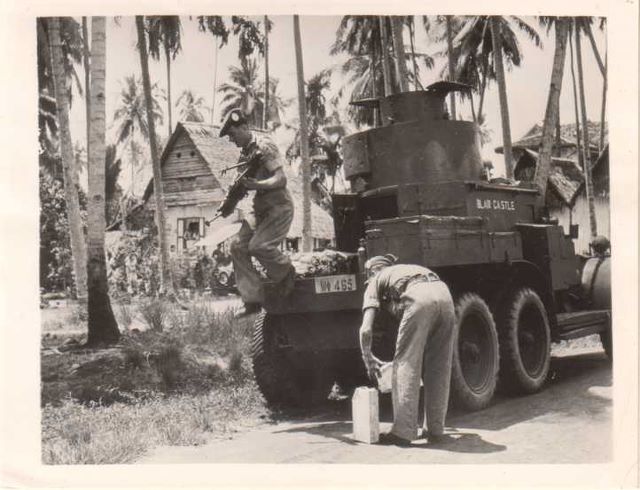
Los orígenes de este blindado británico se han de buscar en el periodo de entreguerras cuando el 19 de julio de 1927 se le adjudicó un contrato a Lanchester Motor Company para la construcción de un vehículo blindado. No fue hasta marzo del año siguiente cuando se presentaron dos prototipos, D1E1 y D1E2. Ambos vehículos presentaban configuraciones diferentes más allá del aspecto físico como forma de la torreta y armamento. Lo más novedoso lo introducía el D1E2 que incluía un juego de controles en su parte trasera para la conducción. Pronto ambos modelos pasaron a los polígonos de pruebas y desvelaron que su chasis eran endebles para este tipo de vehículos de modo que se fabricaron otros 22 ejemplares con los cambios necesarios. Estos se denominaron como Mk I y Mk IA (modelo de mando).

La configuración era convencional con el motor situado en su parte delantera y la cámara de combate ocupaba el resto del vehículo. Su torreta era para dos tripulantes y estaba armada con dos ametralladoras Vickers, una de 12´7 mm y otra de 7´7 mm. Otra ametralladora de 7´7 mm estaba instalada en el frontal del vehículo para su defensa cercana. Esta ametralladora era sustituida por un equipo de radio adicional en su versión de mando. Una pequeña cúpula, que podía girar independientemente a la torreta, proporcionaba la jefe del carro una mejor visibilidad. Contaba con un blindaje de 9 mm y podía alcanzar los 72 Km/h con una autonomía de 320 Km. 


El vehículo resultó fiable mecánicamente y de fácil mantenimiento pero irónicamente resultaba demasiado pesado, 7 toneladas, para desarrollar labores de reconocimiento para las que fue diseñado. Cuando estalló la Segunda Guerra Mundial el vehículo estaba ya casi al final de su vida operativa pero aún así un lote de 29 vehículos fueron enviados a Egipto como refuerzo tras la invasión italiana de Abisinia. A finales de año los vehículos fueron devueltos a Inglaterra ya que los regimientos recibieron los nuevos blindados Morris.

En 1939 la mayoría de estos vehículos; 13 Mk I, 1 Mk IA, 5 Mk II y 3 Mk IIA, fueron enviados al Lejano Oriente donde se asignaron a formaciones menores aliadas de los británicos incluyendo el 2º Batallón de Argyll y Sutherland Highlanders en Malasia. Por su parte los que permanecieron en suelo patrio fueron distribuidos entre unidades motorizadas.

 
Fuentes:
MOSCHANSKIY, I. “Armored vehicles of the Great Britain 1939-1945 part 2” Bronekollektsiya 1999-02
GEORGE, F. “World War Two Armoured Fighting Vehicles and Self-Propelled Artillery” Osprey, 1996
VANDERVEEN, B. “Wheels and Tracks

English version

The origins of the British armored sought in the interwar period when the July 19, 1927 was awarded a contract to Lanchester Motor Company to build an armored vehicle. It was not until the following March when two prototypes, D1E1 and D1E2. Both vehicles had different configurations beyond the physical appearance and shape of the turret and armament. The newest I introduced the D1E2 which included a set of controls on the back for driving. Soon both models passed the test sites and revealed that its chassis were weak for these vehicles so that other 22 specimens were manufactured with the necessary changes. These were called Mk I and Mk IA (control model).


The conventional configuration with the engine was located at the front and fighting compartment occupied the rest of the vehicle. Its turret was for two crew and was armed with two Vickers machine guns, one 12.7 mm and a 7'7 mm. Another 7'7 mm machine gun was installed at the front of the vehicle for close defense. This machine gun was replaced by an additional radio control version. A small dome, which could independently rotate the turret, the head of the car provided better visibility. It had a 9 mm armor and could reach 72 km/h with a range of 320 km

The car was mechanically reliable and easy to maintain but ironically it was too heavy, 7 tons, to develop reconnaissance for which it was designed. When World War II broke out and the car was near the end of its useful life but still a batch of 29 vehicles were sent to Egypt as a booster after the Italian invasion of Abyssinia. At year-end vehicles were returned to England and the regiments received new armored Morris.

In 1939 most of these vehicles, 13 Mk I, 1 Mk IA, 5 Mk II and 3 Mk IIA, were sent to the Far East that were assigned to smaller formations allies of the British including the 2nd Battalion Argyll and Sutherland Highlanders in Malaysia . Meanwhile those who remained on home soil were distributed between motor units.


Sources:
MOSCHANSKIY, I. “Armored vehicles of the Great Britain 1939-1945 part 2” Bronekollektsiya 1999-02
GEORGE, F. “World War Two Armoured Fighting Vehicles and Self-Propelled Artillery” Osprey, 1996
VANDERVEEN, B. “Wheels and Tracks